
How Japanese Businesses Are Combating the Coronavirus


 Restaurants
 Shops
 Sightseeing
 Activities/Others
Airports, which welcome arrivals from and departures to the rest of the world, and public transit like trains and buses, which we rely on to get around, can be vectors for transmitting the coronavirus. Here, we'll cover the stringent health and safety measures in place to prevent the spread of the coronavirus in Japan's airports and on public transit systems.
ANA


■ Facility Information
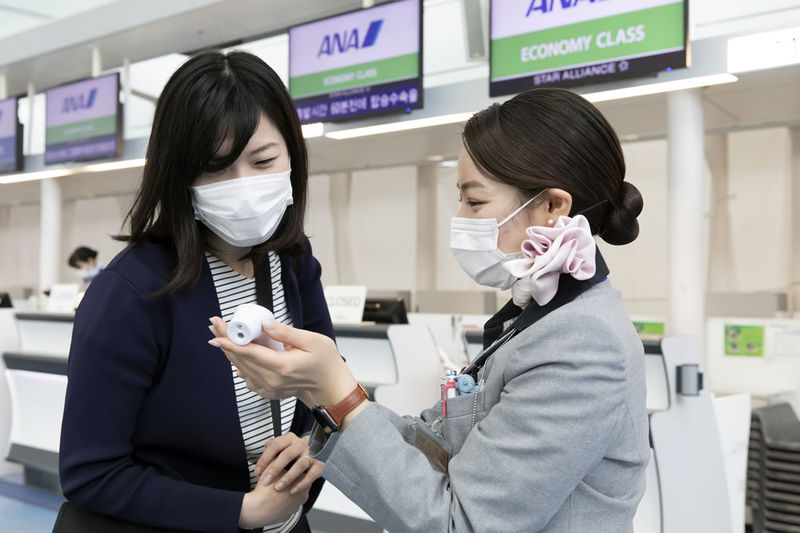
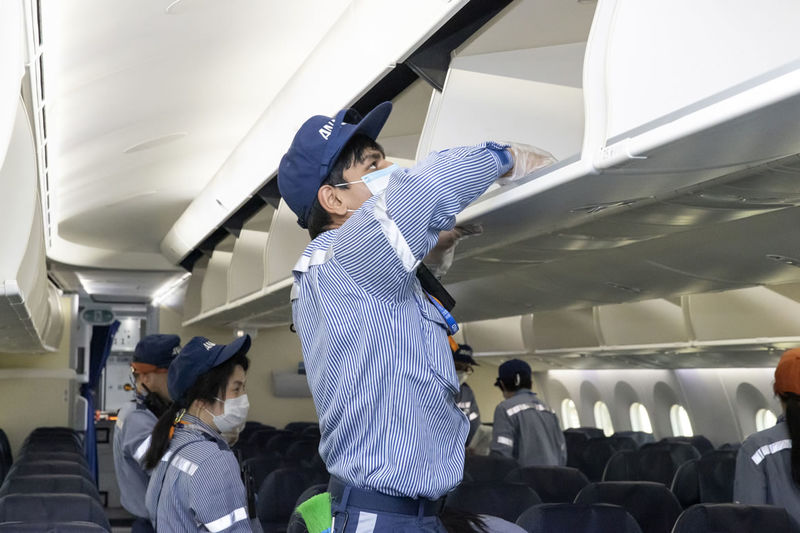
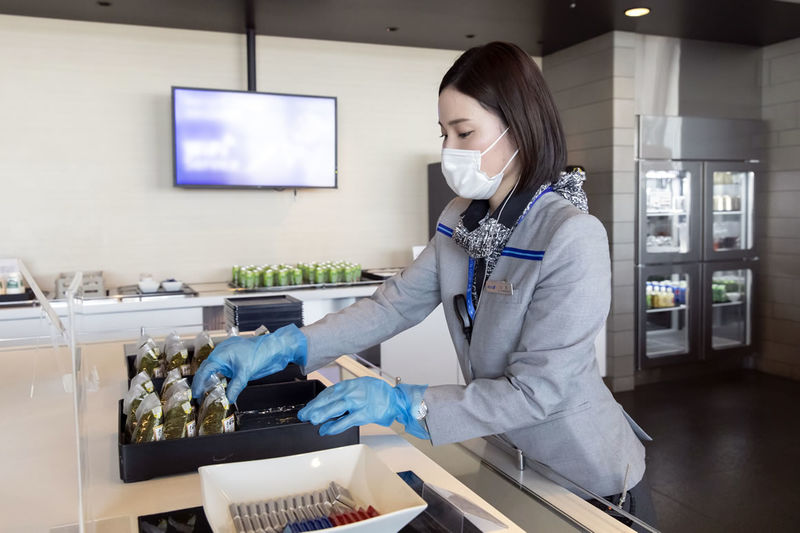
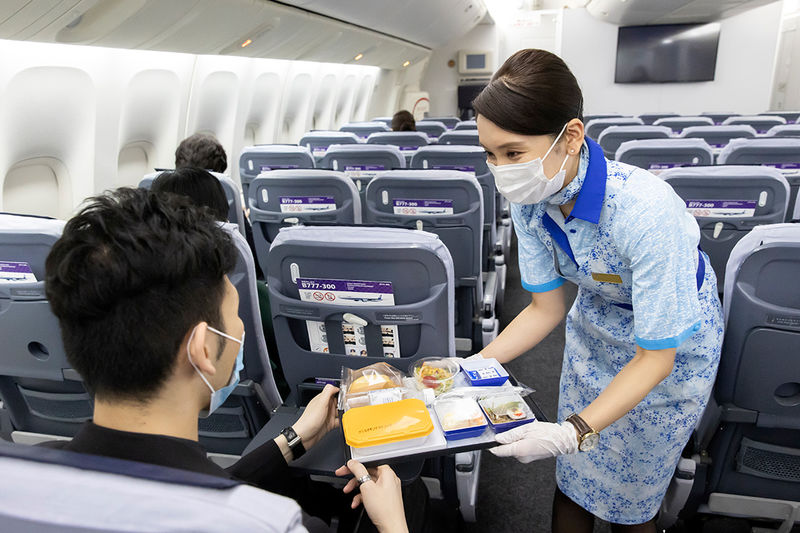
ANA is Japan’s most renowned and largest airline and is also recognized as one of the best airlines in the world by a UK rating company SKYTRAX. It’s motto is “Anshin,Attaka,Akaruku-genki!” which means “Reliable, Warm, Enthusiastic!.” The “ANA Care Promise” is the new standard for air travel which shows how ANA cares and commits passenger safety when they travel on ANA.
■ Health and Safety Measures
-Ground Staff and Cabin Attendants Wearing Masks -Serving you in a hygienic and clean environment -Maintaining social distancing -Boarding Procedures -Aircraft cabins will be disinfected frequently. -Antibacterial Wipes -Ensuring air c... Read More -Ground Staff and Cabin Attendants Wearing Masks -Serving you in a hygienic and clean environment -Maintaining social distancing -Boarding Procedures -Aircraft cabins will be disinfected frequently. -Antibacterial Wipes -Ensuring air circulation Visit here for more details : https://www.ana.co.jp/en/jp/topics/coronavirus-travel-information/initiative/ * As of June 22, 2020
 Official Website
Please check each company's official website for the latest information.
East Japan Railway Company (JR East)
■ Facility Information
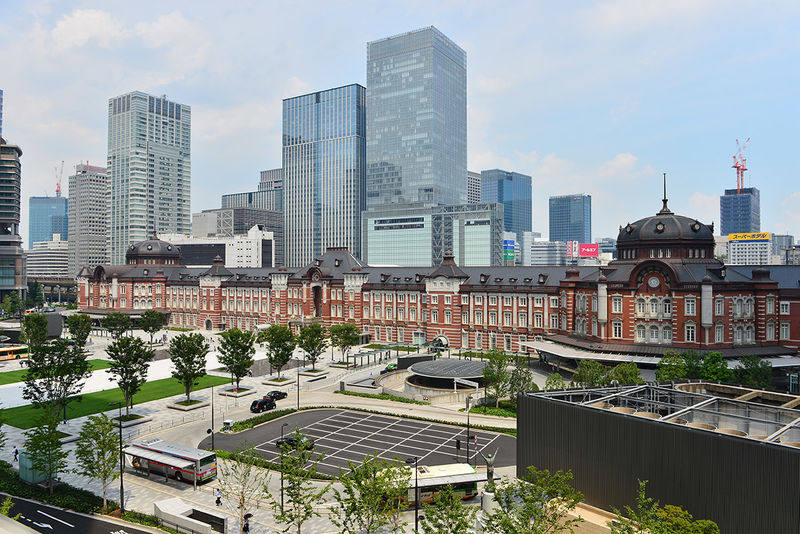
A railway company serving eastern Japan. It operates many lines in the Tokyo metropolitan area, which are used by countless passengers to get to work or school.
■ Health and Safety Measures
• Ventilation on board via air-conditioning systems and open windows • Congestion data is provided online and through an app to reduce overcrowding • Masks are used by all staff members • Vinyl sheets are put in place to prevent airborne ... Read More • Ventilation on board via air-conditioning systems and open windows • Congestion data is provided online and through an app to reduce overcrowding • Masks are used by all staff members • Vinyl sheets are put in place to prevent airborne infection • Alcohol disinfectant is available, including at ticket gates • Ticket machines, handrails on stairs and escalators, and straps and rails on cars are disinfected * As of June 11, 2020
Official Website
Please check each company's official website for the latest information.
Fujikyuko Bus

■ Facility Information
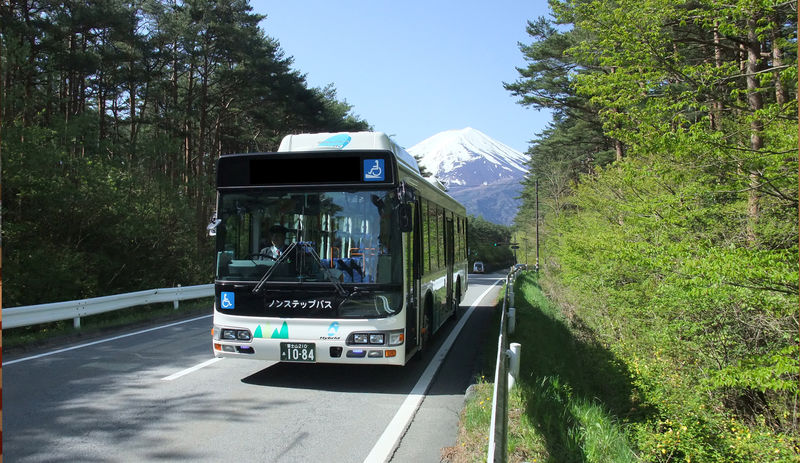
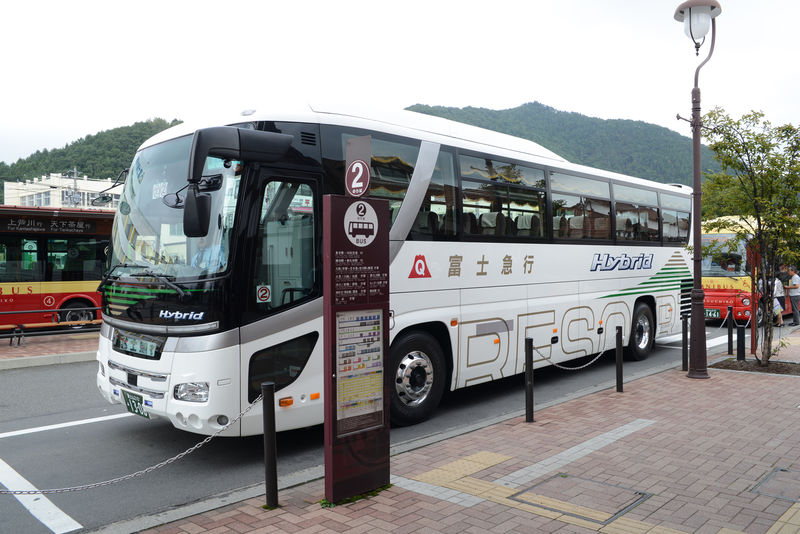
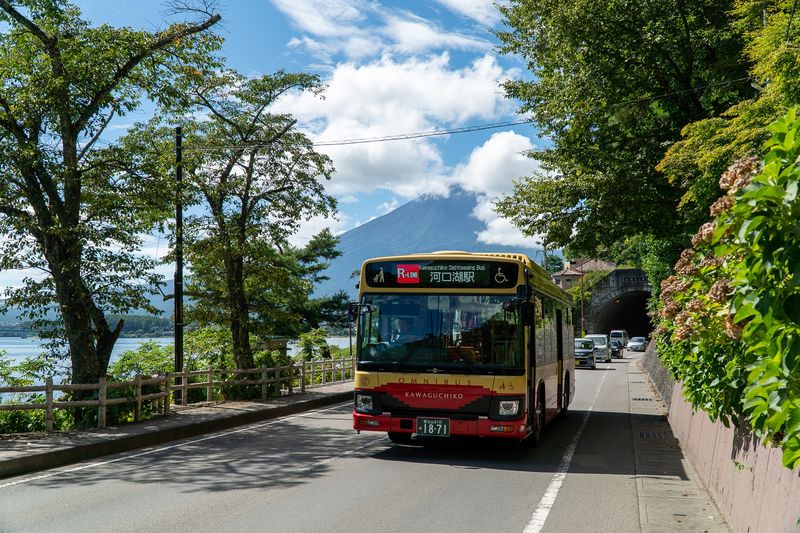
Fujikyuko Bus operates both long-distance buses connecting the Tokyo area, Shizuoka, Kyoto, and Osaka to Mt. Fuji and the Fuji Five Lakes, as well as local bus lines through the Mt. Fuji area. If you’re planning a sightseeing trip to Mt. Fuji, go by bus and enjoy the reasonable prices!
■ Health and Safety Measures
・Surfaces that customers touch frequently are regularly disinfected with alcohol ・Alcohol disinfectant has been placed at numerous locations ・Vehicles are disinfected everyday with an ozone generator machine with sterilizing and deodorizin... Read More ・Surfaces that customers touch frequently are regularly disinfected with alcohol ・Alcohol disinfectant has been placed at numerous locations ・Vehicles are disinfected everyday with an ozone generator machine with sterilizing and deodorizing properties ・Staff must undergo health checks every day including temperature exams ・Customers are encouraged to wear masks * As of September 28, 2020
Official Website
Please check each company's official website for the latest information.
Fujikyuko Line
■ Facility Information
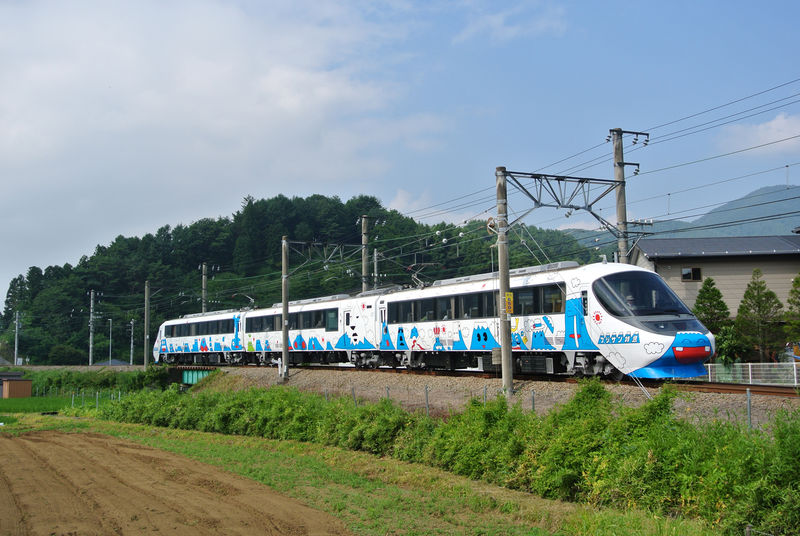
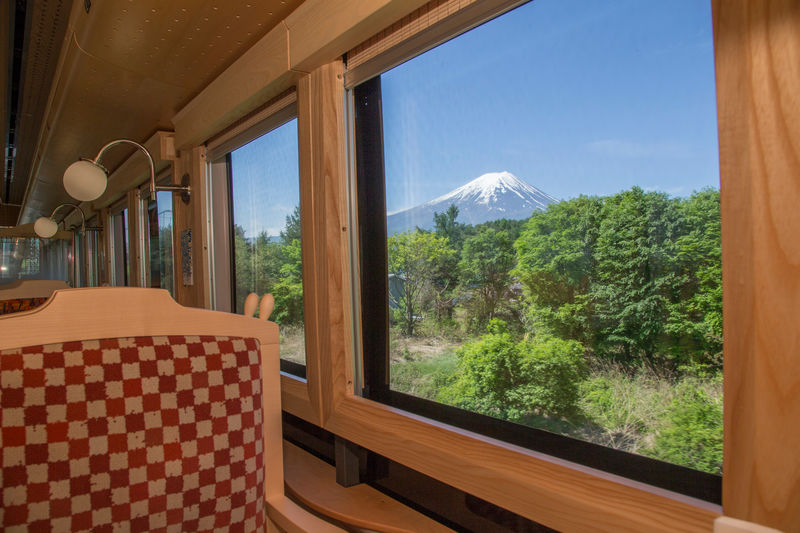
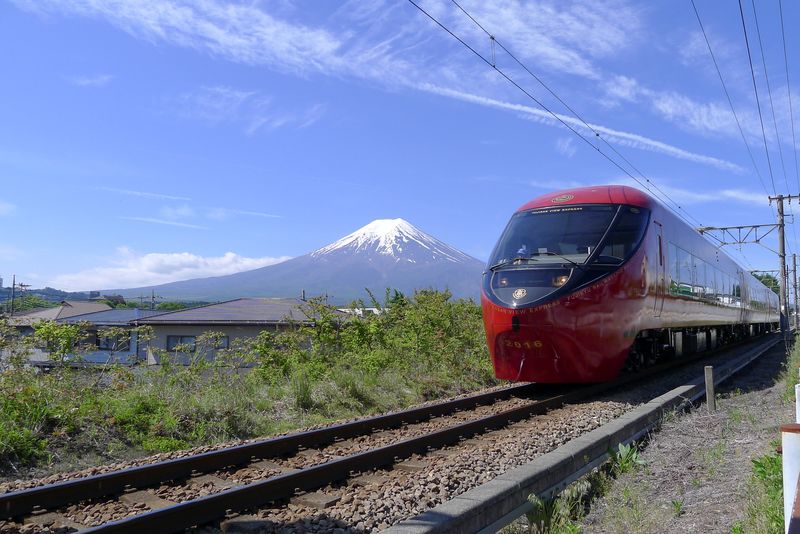
The Fujikyuko Line is known as the closest railway to Mt. Fuji, climbing 500m in elevation over its route. Offering direct service onto the JR Chuo Line, it is the best way to travel through Mt. Fuji and the Fuji Five Lakes areas. The Fuji Tozan Densha and Fujisan Express sightseeing trains in particular allow you to enjoy a view of the mountain from the train windows.
■ Health and Safety Measures
・Train cars are ventilated by opening windows ・Surfaces that customers touch frequently are regularly disinfected with alcohol ・Train cars are disinfected everyday with an ozone generator machine with sterilizing and deodorizing properties... Read More ・Train cars are ventilated by opening windows ・Surfaces that customers touch frequently are regularly disinfected with alcohol ・Train cars are disinfected everyday with an ozone generator machine with sterilizing and deodorizing properties ・Alcohol disinfectant has been placed at faregates ・Waiting rooms are ventilated ・Measures are in place to ensure customers maintain appropriate distance when lining up at ticket windows ・Staff must undergo health checks every day including temperature exams * As of September 28, 2020
Official Website
Please check each company's official website for the latest information.
Fujikyu Yamanashi Hire
■ Facility Information
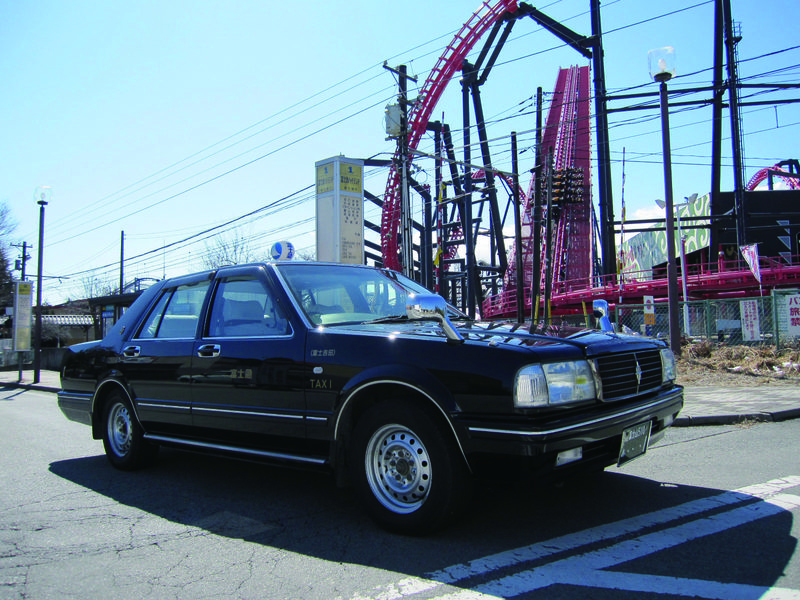
Fujikyu Yamanashi Hire is a hired-cab service for the Fuji Five Lakes area. It offers numerous plans for chartering vehicles to travel around all the best Mt. Fuji viewpoints or sightsee the Five Lakes region. They can help you organize the best vacation!
■ Health and Safety Measures
・Surfaces that customers touch frequently are regularly disinfected with alcohol ・Alcohol disinfectant has been placed at numerous locations ・Vehicles are disinfected with an ozone generator machine with sterilizing and deodorizing propert... Read More ・Surfaces that customers touch frequently are regularly disinfected with alcohol ・Alcohol disinfectant has been placed at numerous locations ・Vehicles are disinfected with an ozone generator machine with sterilizing and deodorizing properties ・Staff must undergo health checks every day including temperature exams * As of September 28, 2020
Official Website
Please check each company's official website for the latest information.
Hankyu Railway
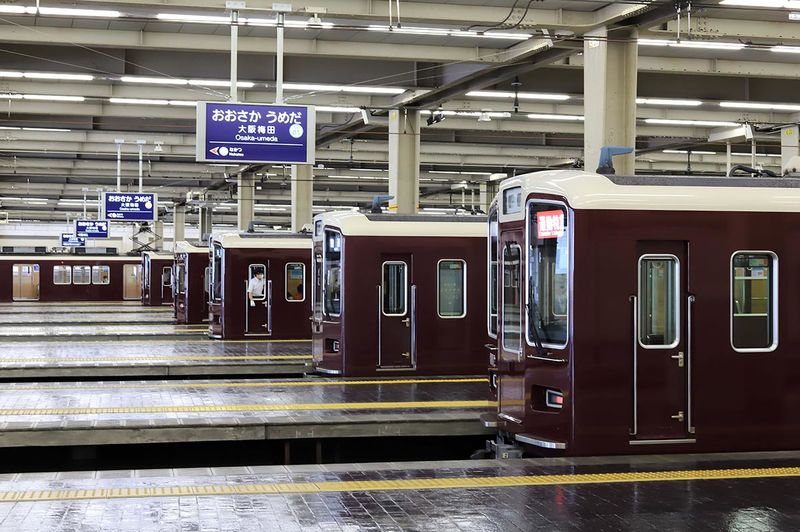
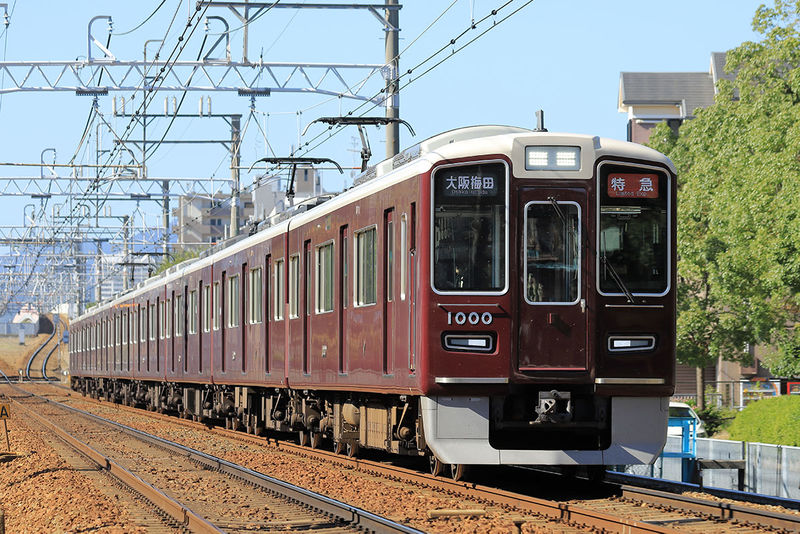
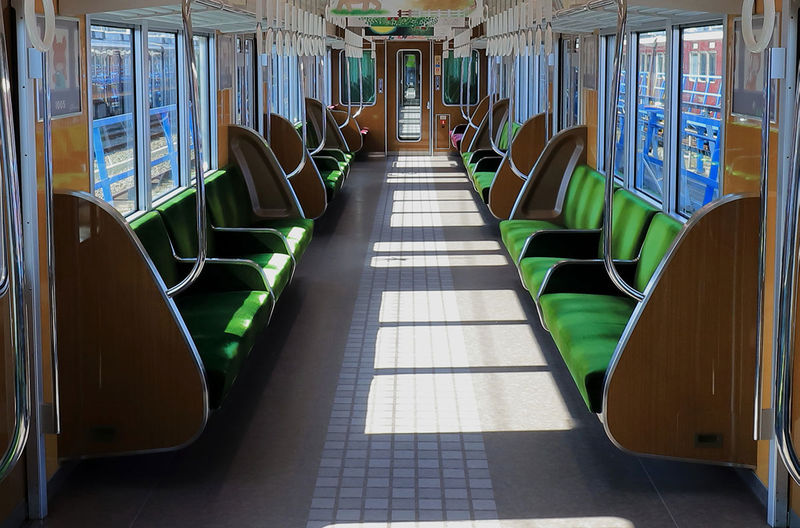
■ Facility Information
A railway connecting Umeda in Osaka, Kobe and Takarazuka in Hyogo Prefecture, and Kyoto. The railroad is well loved by locals who rely on it to get to work and school, or to reach travel destinations. On the Japanese Customer Satisfaction Index, Hankyu has won 1st place among commuter railroads for 11 years running (as of February 2020).
■ Health and Safety Measures
• Train cars are regularly disinfected • Windows are open for ventilation • Staff on the train and on platforms are wearing masks • Announcements for infection prevention measures such as staggered commuting and cough etiquette are broadc... Read More • Train cars are regularly disinfected • Windows are open for ventilation • Staff on the train and on platforms are wearing masks • Announcements for infection prevention measures such as staggered commuting and cough etiquette are broadcast • Ticket machines and stair handrails in stations are regularly disinfected • Disinfectants are placed at information counters • Vinyl sheets are installed at ticket counters (As of June 25, 2020)
Official Website
Please check each company's official website for the latest information.
Hokkaido Railway Company (JR Hokkaido)
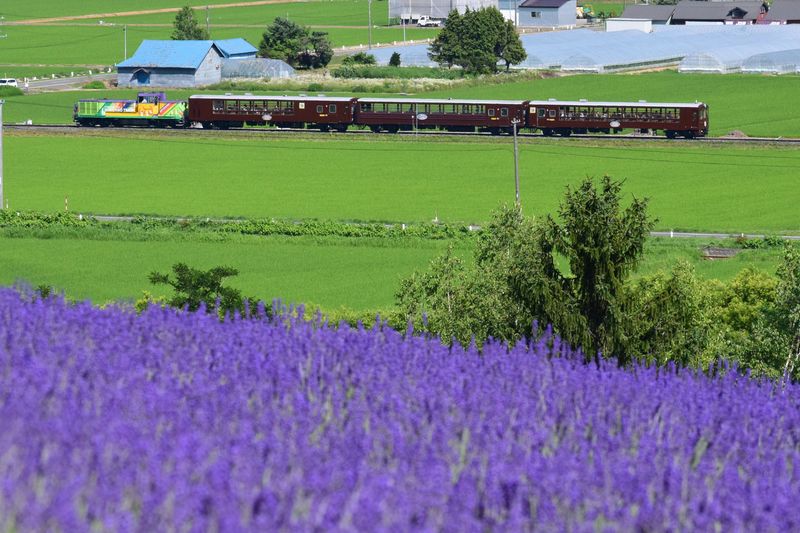
■ Facility Information
JR Hokkaido, the railway company of Hokkaido, offers voyages through the region’s vast expanses, allowing travelers to marvel at the natural scenery speeding past their train windows. International travelers can get the Hokkaido Rail Pass for days of unlimited rides at a very low price.
■ Health and Safety Measures
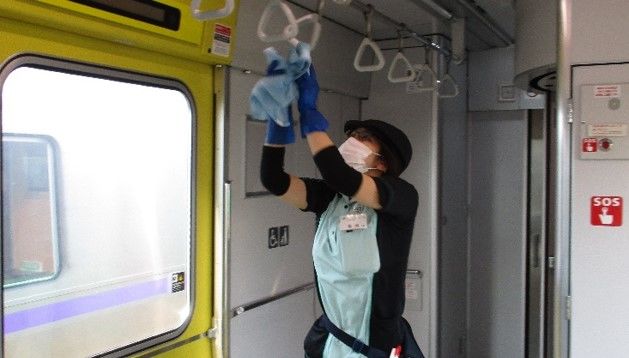
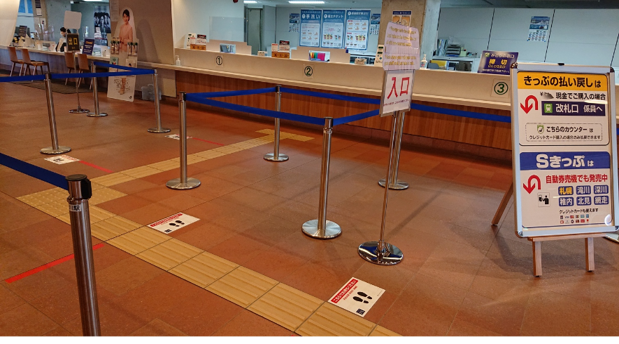
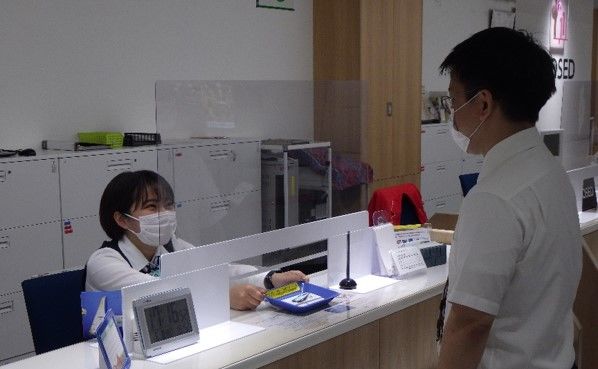
At train stations and information counters: • Doors are kept open to improve ventilation • Markers have been placed on floors to ensure proper social distancing • Sneeze guards have been placed at Midori-no-Madoguchi ticket offices to pre... Read More At train stations and information counters: • Doors are kept open to improve ventilation • Markers have been placed on floors to ensure proper social distancing • Sneeze guards have been placed at Midori-no-Madoguchi ticket offices to prevent droplet transmission • Vinyl sheets have been placed at faregate windows to prevent droplet transmission • Station staff are wearing masks Aboard trains: • Hand straps and other surfaces are periodically disinfected • Partition doors between train cars are kept open to improve ventilation • Ventilation through air conditioners (for commuter and express trains) • Staff on board are wearing masks Please check the website below for more details regarding the JR Hokkaido’s coronavirus prevention measures. https://www.jrhokkaido.co.jp/global/pdf/e-corona20200831.pdf * As of August 4, 2020
Official Website
Please check each company's official website for the latest information.
Kagoshima Port (Sakurajima Ferry)
■ Facility Information
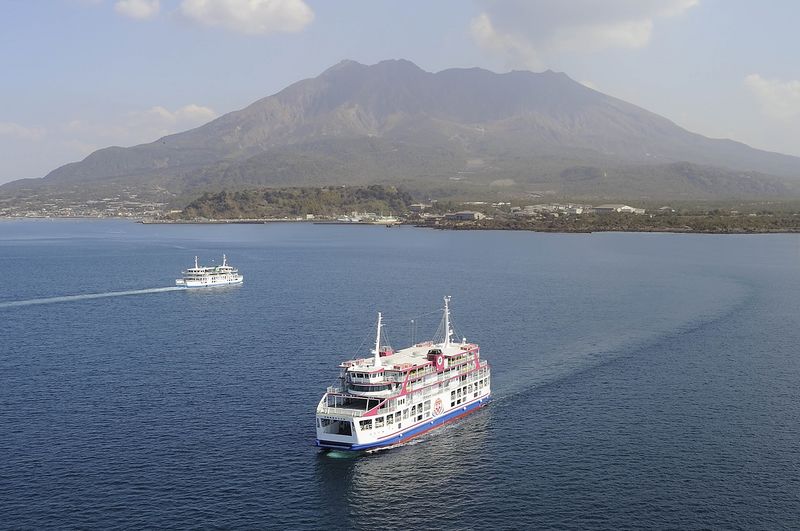
A sea traffic agency that serves an important function by connecting the Sakurajima area with Kagoshima City (approx. 4 km), as well as connecting the Satsuma and Osumi peninsulas. A fleet of 5 ships run 65 round-trips per day (130 one-way trips), operating 24 hours/day and carrying 4.3 million passengers and 1.17 million vehicles per year. In addition to providing access to Sakurajima, Kagoshima’s premier tourist spot, the ships are also used as rescue vessels during emergencies.
■ Health and Safety Measures
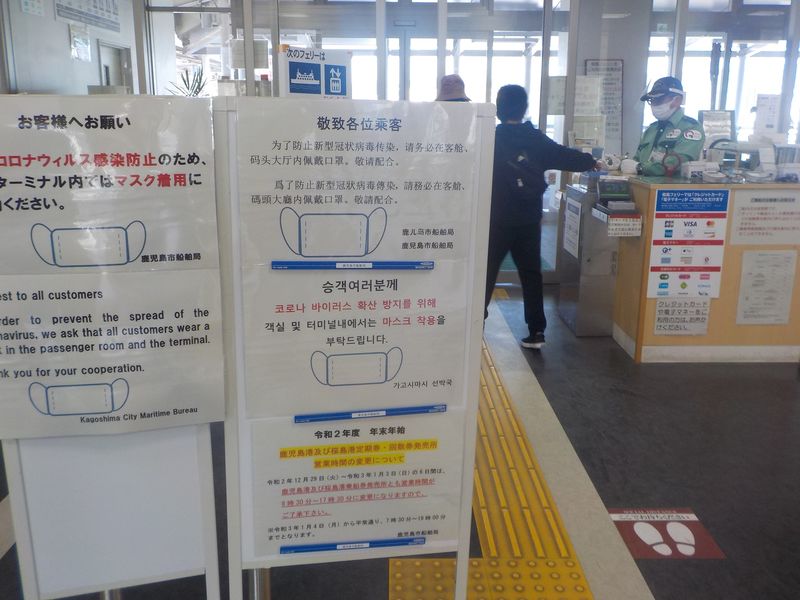
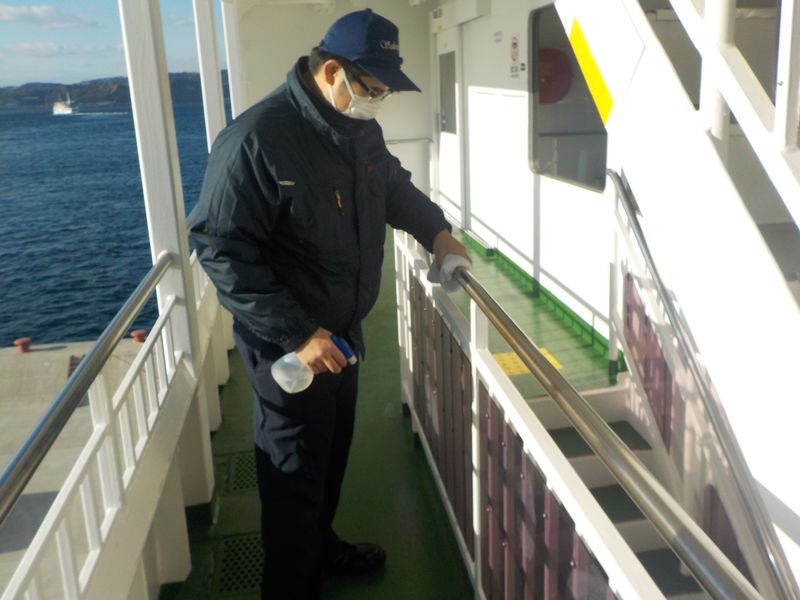
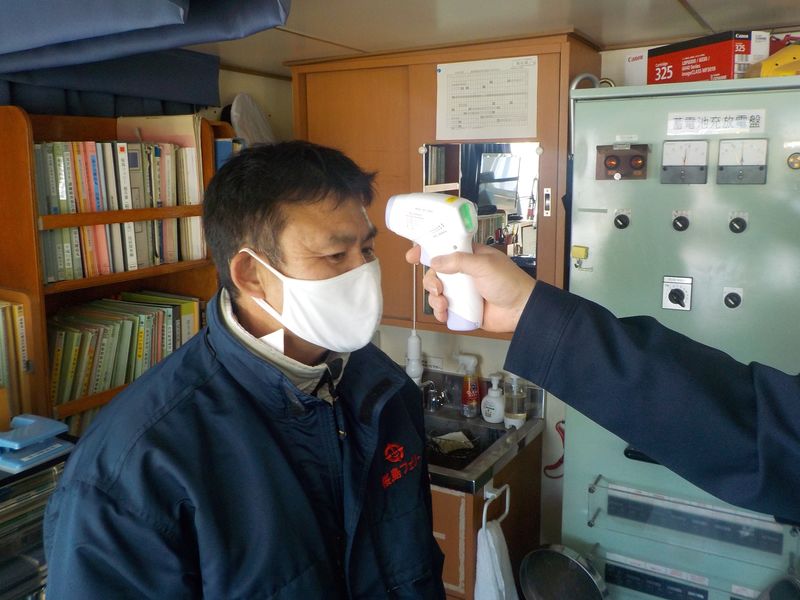
①Temperature are checks required for all crew members prior to their shift ②Disinfection of handrails, etc. in passenger cabins is performed between trips ③Terminal building interiors are disinfected many times per day, including the escal... Read More ①Temperature are checks required for all crew members prior to their shift ②Disinfection of handrails, etc. in passenger cabins is performed between trips ③Terminal building interiors are disinfected many times per day, including the escalator, elevator buttons, etc. ④Signs urging mask usage are displayed in four languages (Japanese, English, Chinese, and Korean) at the ticket window, social distancing stickers are in place, and ticket window staff use a mask or face shield. Also, ・Thorough use of masks are required for crew members ・Passenger cabins are thoroughly ventilated ・Disinfectant is available in passenger cabins and at the Sakurajima and Kagoshima Terminals ・Announcements reminding passengers of infection prevention measures are played in passenger cabins and at the Sakurajima and Kagoshima Terminals ・Transparent film in place at terminal counters *As of January 4, 2021
Official Website
Please check each company's official website for the latest information.
Kansai International Airport

■ Facility Information
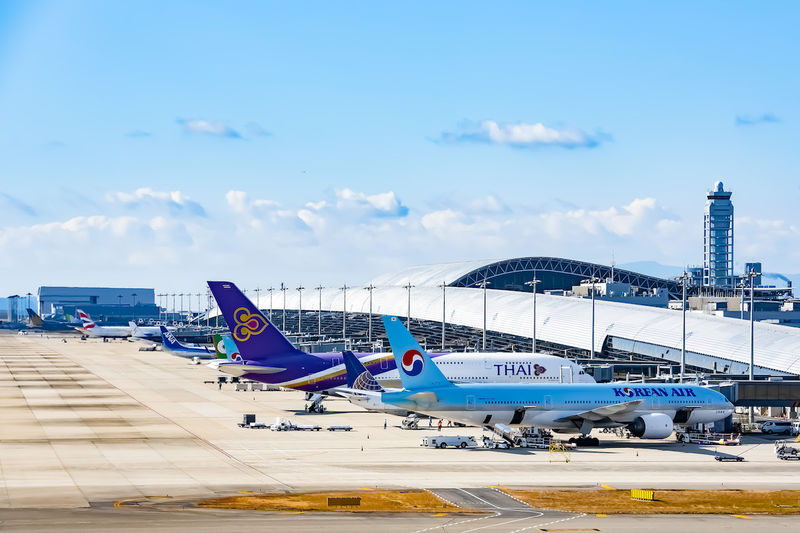
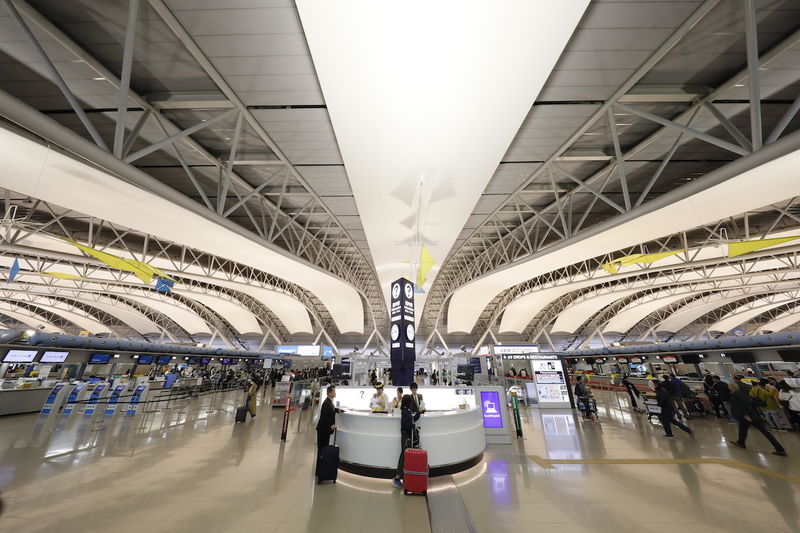
The gateway to the Kansai region. It has two runways (4,000 meters and 3,500 meters long) and operates 24 hours a day. The airport offers 1,570 flights per week, flying to a total of 91 cities in 26 countries (as of summer 2019).
■ Health and Safety Measures
• Airport staffs are wearing masks • Areas that passengers often use such as counters, security checkpoints, and escalators are thoroughly disinfected and cleaned • Disinfectant for customers has been placed throughout the terminals • For... Read More • Airport staffs are wearing masks • Areas that passengers often use such as counters, security checkpoints, and escalators are thoroughly disinfected and cleaned • Disinfectant for customers has been placed throughout the terminals • For passengers boarding domestic flights, thermal screening (taking passengers’ temperatures) is included in airport security • Transparent vinyl curtains are installed at registers and counters, as necessary, to prevent coronavirus droplet infection • Restrooms are regularly cleaned and sanitized, and use of hand driers has been suspended • Announcements are broadcast within the terminal, and posters on infection control are on display • Social distancing is enforced in spaces such as security checkpoints and waiting areas (As of June 25, 2020)
Official Website
Please check each company's official website for the latest information.
Keihan Railway
■ Facility Information
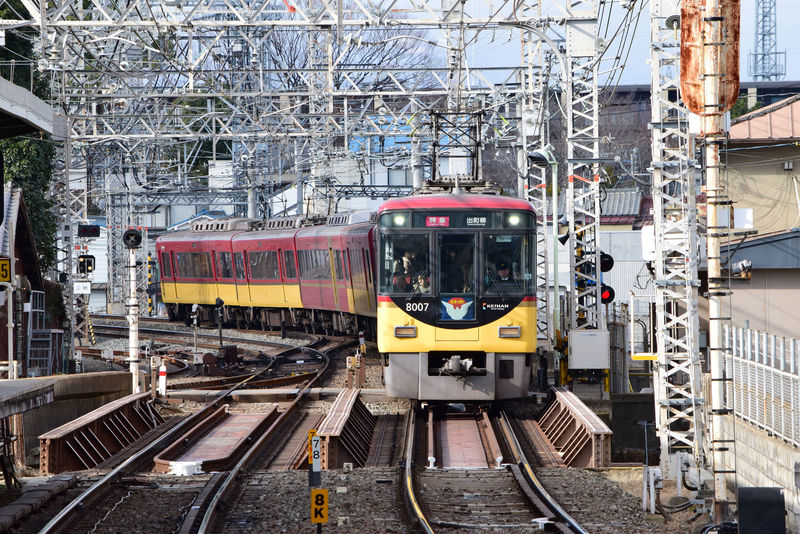
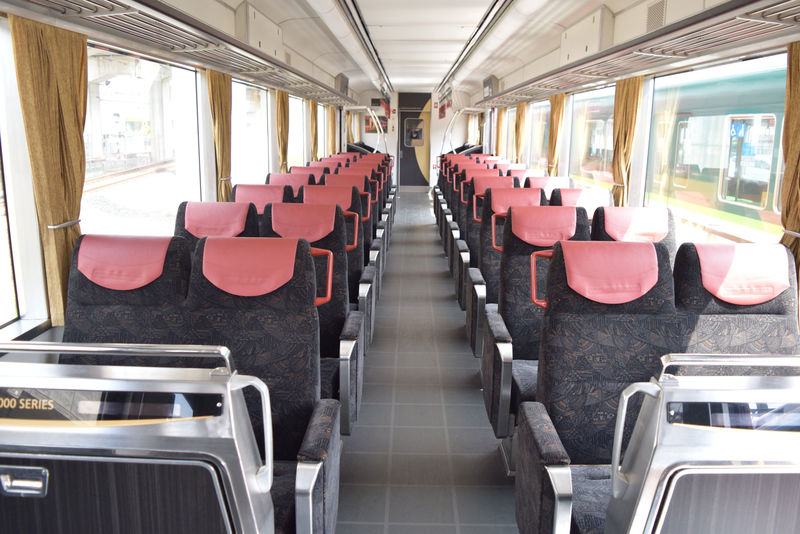
A railway connecting Osaka, Kyoto, and Shiga Prefectures. An average of about 800,000 passengers use the railway every day, both to commute to school and work, and to travel to Osaka, Kyoto, and Lake Biwa. It also offers special vehicles offering a superior experience, including double-decker trains and special “Premium Cars” with reserved seating.
■ Health and Safety Measures
• All staff members interacting with customers (including staff aboard trains and in stations) are wearing masks * In exceptional cases - such as on outdoor platforms where social distancing is being observed - staff members may take off th... Read More • All staff members interacting with customers (including staff aboard trains and in stations) are wearing masks * In exceptional cases - such as on outdoor platforms where social distancing is being observed - staff members may take off their masks to prevent heatstroke. • Ventilation on board through continuous air conditioning and opening windows • Public announcements on board and in stations • On-board disinfections (all train cars are disinfected sequentially) • Hand soap is placed in restrooms in major stations; hand dryers are suspended • Smoking areas within stations are closed (As of June 10, 2020)
Official Website
Please check each company's official website for the latest information.
Keikyu Corporation

■ Facility Information
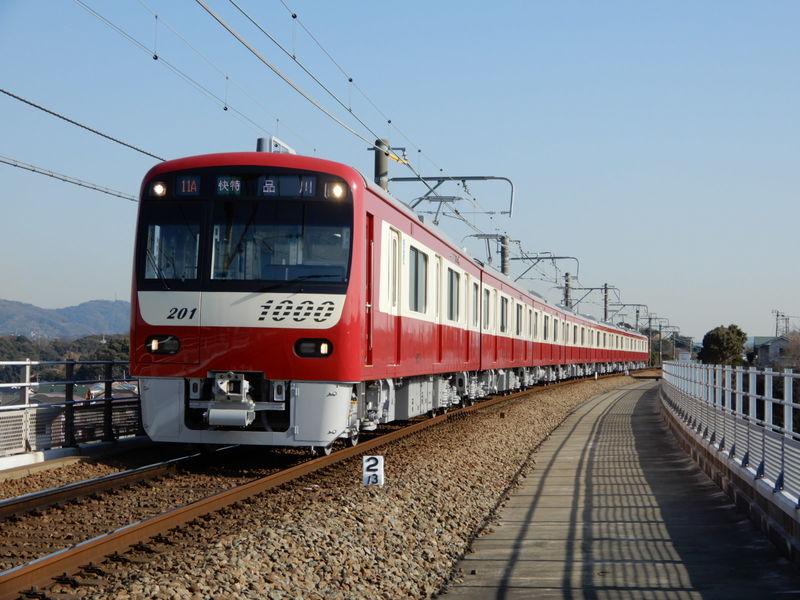
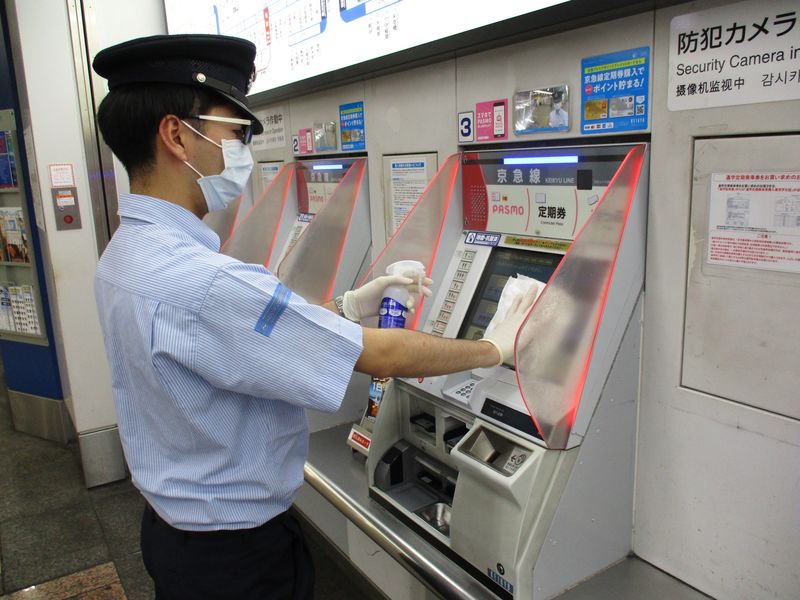
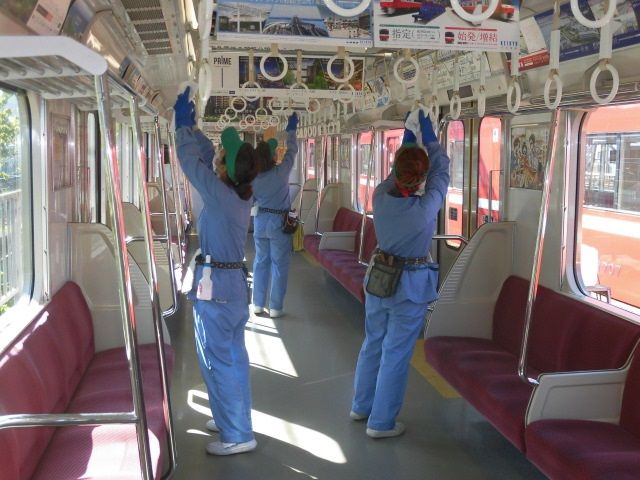
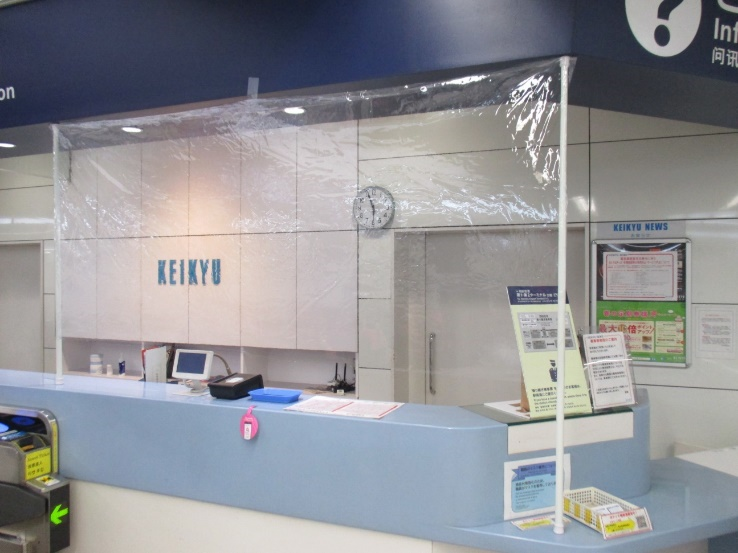
Operates five train lines: the Main Line, which goes from the city center—passing through Kawasaki, Yokohama, and Yokosuka—to the Miura Peninsula, the Airport Line, the Daishi Line, the Zushi Line, and the Kurihama Line. Not only does it play a vital role in the lives of commuters, but it has contributed towards the development of the areas surrounding its train lines thanks to its safe and trusted transportation services. In recent years, it has even been trying to improve access to Haneda Airport due to the airport's growing importance within Japan and the aviation industry.
■ Health and Safety Measures
■Coronavirus prevention measures within train stations and carriages ・Ventilation of train carriages through air conditioners that bring in outside air (Keikyu 2100 series also have exhaust fans) ・All train doors are opened at rail depots ... Read More ■Coronavirus prevention measures within train stations and carriages ・Ventilation of train carriages through air conditioners that bring in outside air (Keikyu 2100 series also have exhaust fans) ・All train doors are opened at rail depots for ventilation purposes ・Public awareness broadcasts regarding coronavirus prevention are made ・Regular disfinection (antiviral and antibacterial coatings and alcohol-based solution) of various areas is done Train carriages: Handrails, hand straps, window frames, etc. Train stations: Ticket machines, fare gates, waiting rooms, stair rails, toilets, escalator handrails, elevator buttons, etc. ・Antiviral and antibacterial coatings are applied on train seats and air conditioning filters ・Hand sanitizers are set up at all 72 train stations ・Doors are opened at train station counters and waiting rooms for ventilation purposes ・Shields to prevent droplet transmission are set up at interphones by fare gate counters and motion detectors meant for those with visual impairments ・Hand soap has been placed in all toilets ■Coronavirus prevention measures that staff are undertaking Ensuring that they behave in a way that prevents infection as well as the spread of infection Wearing face masks Thorough and regular hand washing and sanitizing Staff regularly monitor their health through measures such as checking their temperature before and after work Staff offices at train stations are properly sanitized and ventilated * As of March 15, 2021
Official Website
Please check each company's official website for the latest information.
Kurobe Gorge Railway
■ Facility Information
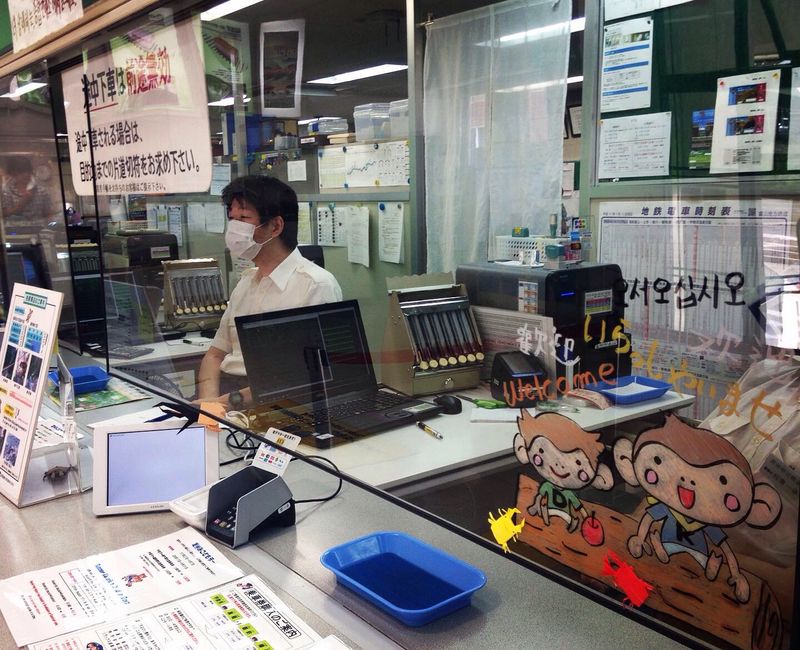
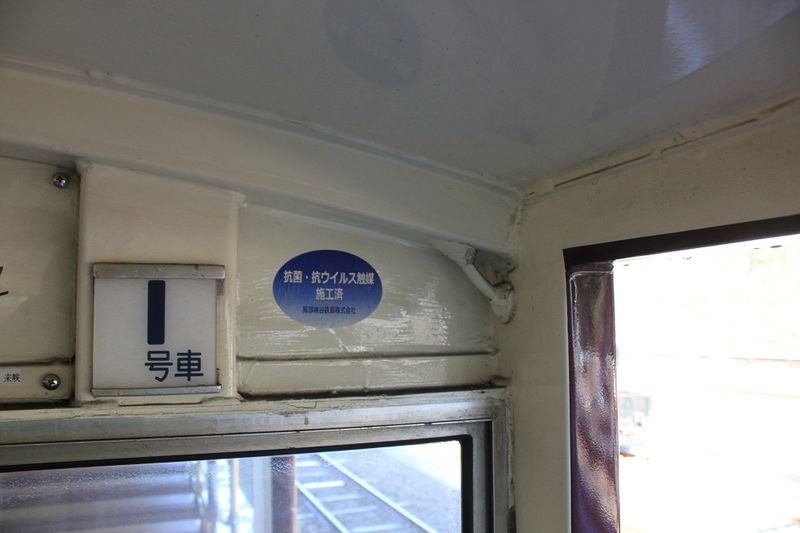
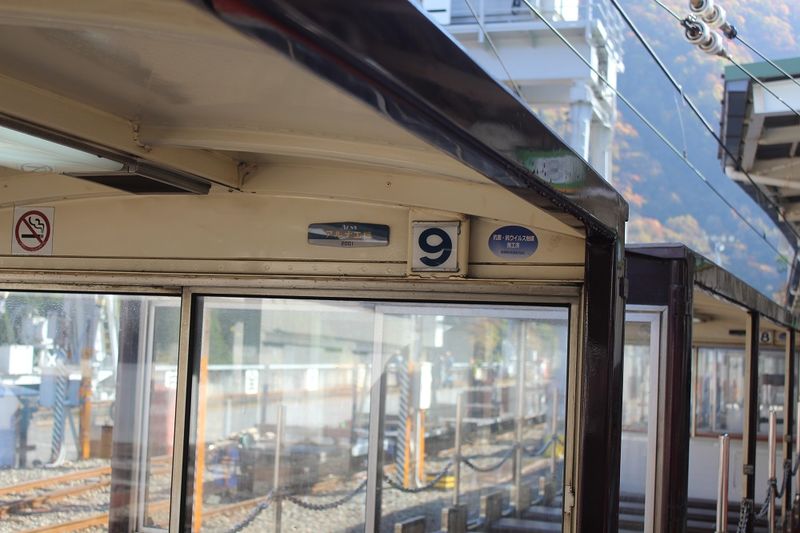
This sightseeing train runs alongside the incredibly clear Kurobe River within Kurobe Gorge, one of Japan’s most prominent V-shaped valleys. Admire the seasons fly by from the train’s windows like the budding green and bits of frost found around the gorge in the spring, or enjoy the crisp air coming off the Kurober River or cooling the passengers down as they travel through the train tunnels in the summer. And in autumn, there's naturally plenty of beautiful fall foliage decorating the surrounding mountains.
■ Health and Safety Measures
・The train stations are thoroughly disinfected and have been equipped with alcohol sanitizers. ・All trains are disinfected and undergo antibacterial treatment daily. ・Carriages with windows are thoroughly ventilated. ・Passenger capacity h... Read More ・The train stations are thoroughly disinfected and have been equipped with alcohol sanitizers. ・All trains are disinfected and undergo antibacterial treatment daily. ・Carriages with windows are thoroughly ventilated. ・Passenger capacity has been reduced (to about 80%). ・Seating at train stations has been separated to allow for social distancing. ・Temperature readers have been installed. * As of November 10, 2021
Official Website
Please check each company's official website for the latest information.
Minatomirai Line
■ Facility Information
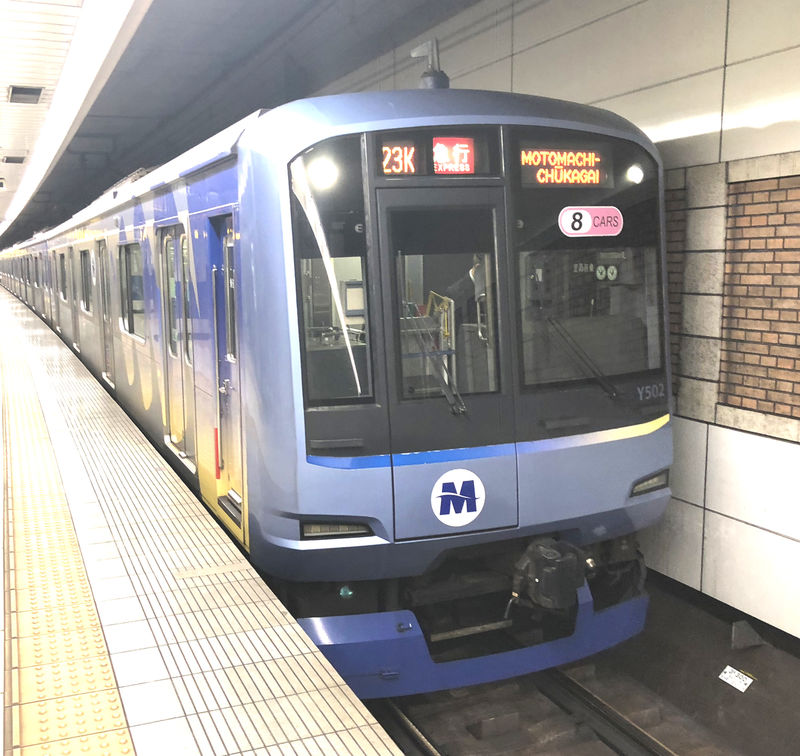
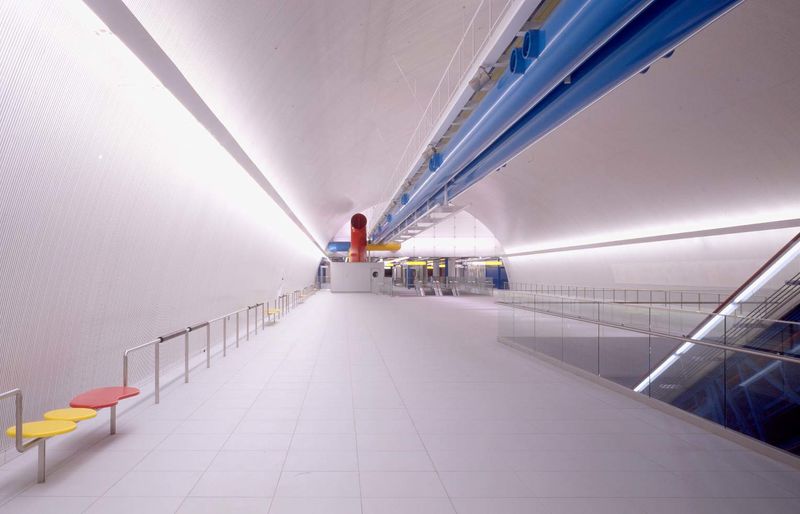
Japan is the world's railway kingdom, and Yokohama—the city that the Minatomirai Line goes through—is said to be the birthplace of the Japanese railway. This unique train line has just six stations, each of which are designed around different concepts. It's definitely worth seeing each train station on this line!
■ Health and Safety Measures
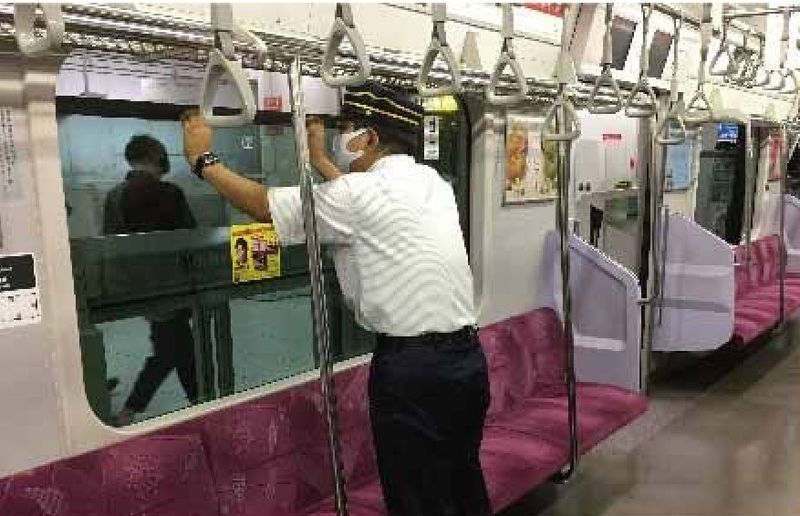
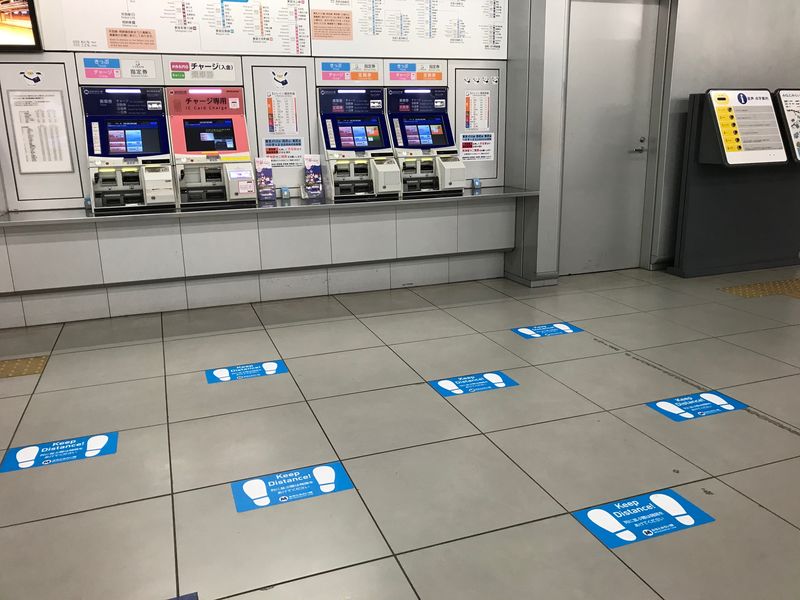
To ensure passengers' safety, the Minatomirai Line is implementing various measures in trains and stations to avoid the three Cs (closed spaces, crowded places, close contact), as well as being more rigorous and thorough in regards to the cl... Read More To ensure passengers' safety, the Minatomirai Line is implementing various measures in trains and stations to avoid the three Cs (closed spaces, crowded places, close contact), as well as being more rigorous and thorough in regards to the cleanliness of train facilities. ◯ Thorough ventilation of train carriages ◯ Announcements requesting passengers to work remotely or stagger their work times in order to reduce crowdedness ◯ Regular disfinection of station facilities such as escalators, stair rails, elevator buttons, and ticket machines ◯ Regular disinfection of train carriages ◯ Alcohol disinfectant has been placed all throughout train stations ◯ Markings have been placed at ticket and fare adjustment machines to enforce physical distance when lining up ◯ Antibacterial sheets have been placed on ticket and fare adjustment machine panels ◯ Antiviral and antibacterial coatings have been placed on train carriage fixtures such as hand straps, rails, seats, and air conditioners * As of March 15, 2021
Official Website
Please check each company's official website for the latest information.
Nippori-Toneri Liner

■ Facility Information
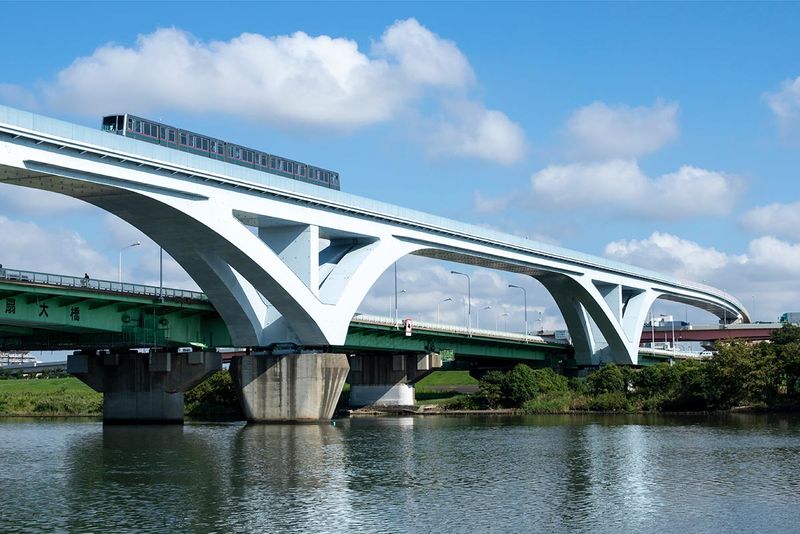
A 9.7 km line connecting Nippori Station (Arakawa-ku) with the Toneri area (Adachi-ku). It’s a modern transit system operated autonomously by a computer system.
■ Health and Safety Measures
• Straps and handrails on train cars are regularly disinfected • Ticket machines, escalator and stair handrails, and other station machinery within stations are regularly disinfected • Ventilation on board via air-conditioning systems and ... Read More • Straps and handrails on train cars are regularly disinfected • Ticket machines, escalator and stair handrails, and other station machinery within stations are regularly disinfected • Ventilation on board via air-conditioning systems and open windows • Alcohol disinfectant is available (including in station offices) • Use of hand dryers within station restrooms is suspended • Announcements are broadcast asking for cooperation on preventing infection • Masks are used by staff members • For staff members, hand washing and gargling is strictly enforced *As of May 26, 2020
Official Website
Please check each company's official website for the latest information.
Odakyu Electric Railway Co., Ltd.
■ Facility Information
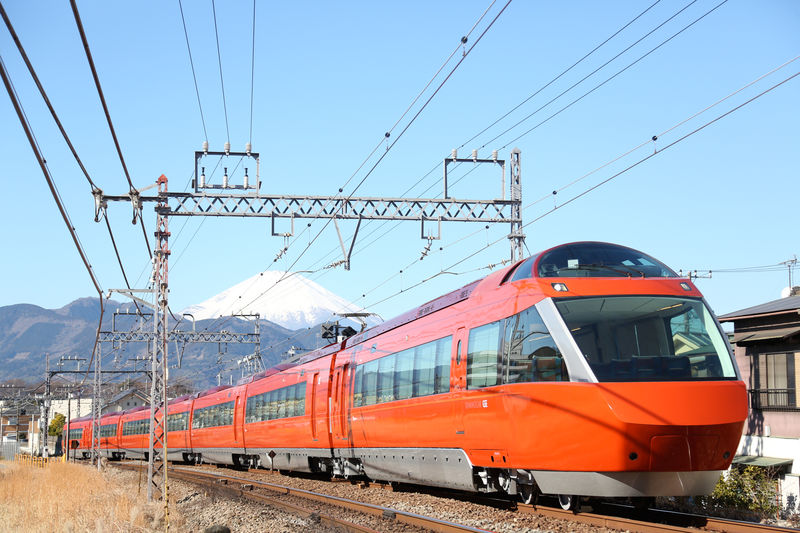
The Odakyu Electric Railway operates 3 lines, starting in Shinjuku: the Odawara Line, which runs to Odawara, the gateway to Hakone; the Enoshima Line, which goes to the Shonan area; and the Tama Line, which runs all the way to Tama New Town. The lines consist of a total of 70 stations, spanning 120.5 km. The Odakyu Electric Railway serves approximately 2.1 million passengers a day, from commuters to travelers.
■ Health and Safety Measures
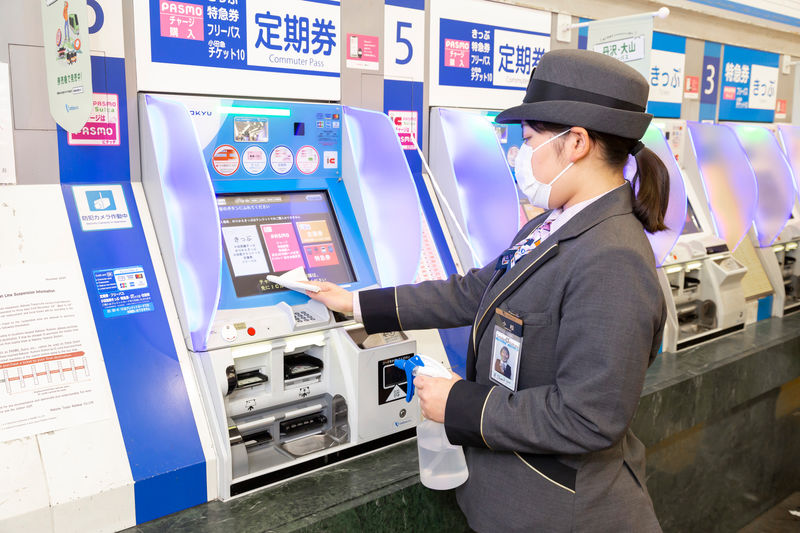
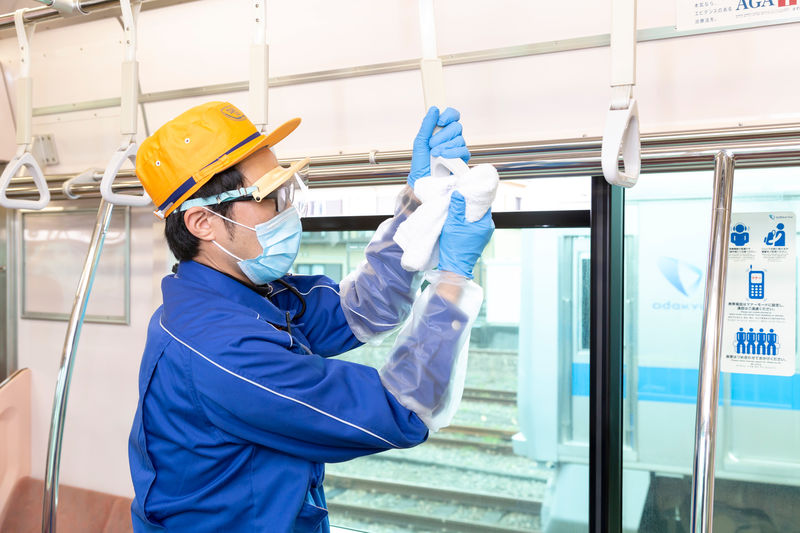
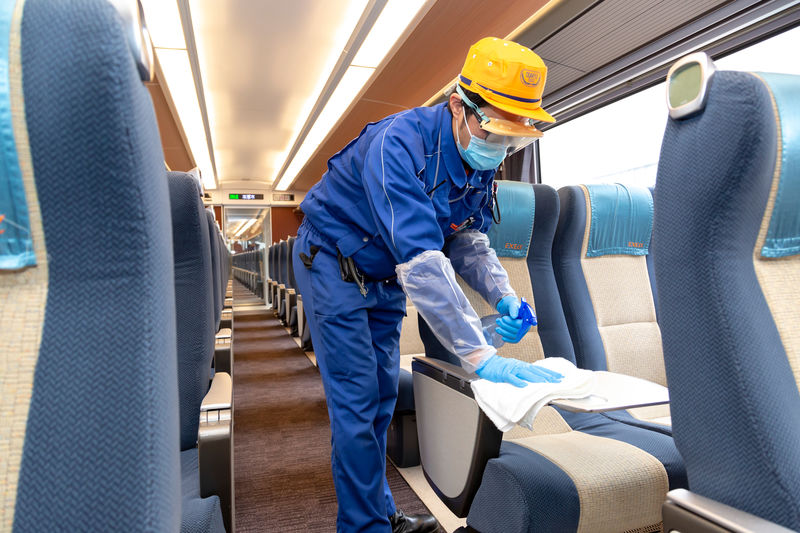
In order to ensure passengers' safety, the Odakyu Electric Railway is implementing various measures to prevent the spread of the coronavirus. ・Staff wear masks ・Staff disinfect ticket and fare adjustment machi... Read More In order to ensure passengers' safety, the Odakyu Electric Railway is implementing various measures to prevent the spread of the coronavirus. ・Staff wear masks ・Staff disinfect ticket and fare adjustment machines (disinfectant is also placed nearby) ・Disinfectant (or hypochlorous acid solution) is placed at open counters ・Panels (or sheets) have been set up at open counters to prevent droplet transmission ・Liquid soap for washing hands is always available ・Antibacterial treatment for areas frequently touched by passengers ・Windows opened by staff (on commuter trains) ・Stickers placed on the approximate positions where windows are opened (on commuter trains) ・Stickers placed on cars to indicate which have had antibacterial treatment (on commuter trains) ・Cars ventilated by air conditioners set up in the cars (Limited Express Romancecar) * As of March 16, 2021
Official Website
Please check each company's official website for the latest information.
Osaka Metro
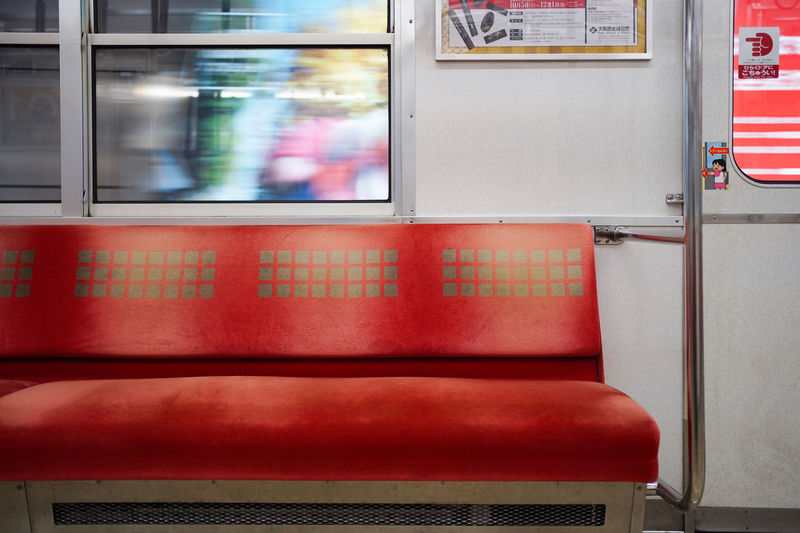
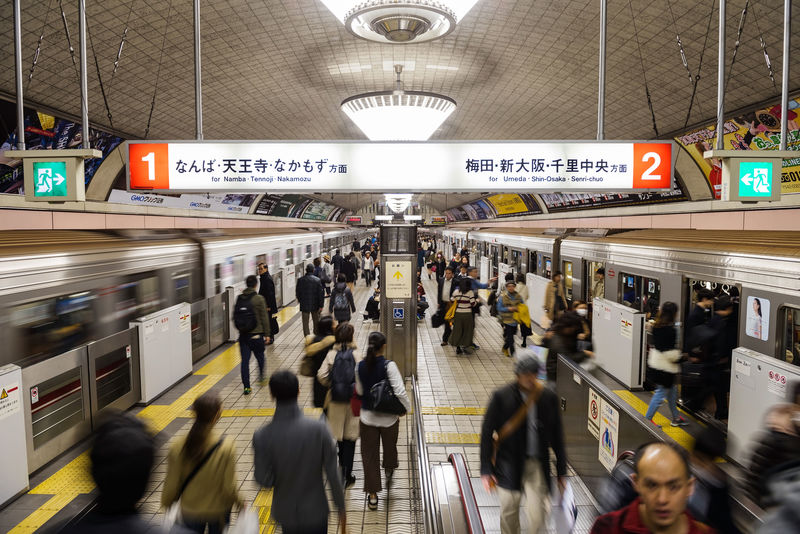
■ Facility Information
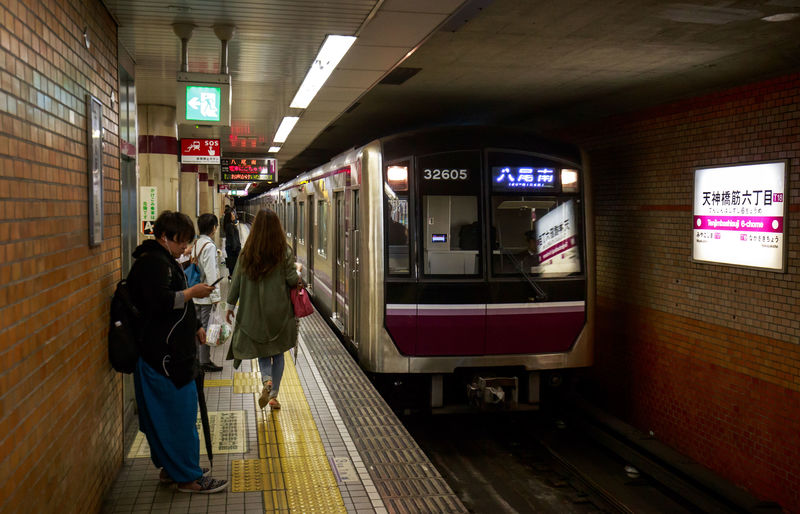
A subway network covering Osaka Prefecture. There are 9 subway lines that allow you to conveniently reach major tourist sites, including Umeda (Osaka’s leading business district), Namba, Osaka Castle, Sumiyoshi Taisha Shrine, Universal Studios Japan, and the Tsutenkaku Tower.
■ Health and Safety Measures
- Alcohol disinfectants are installed at the following locations: • Subway: Fare gates (237 locations), lost and found, Osaka Metro information counters (3 locations), commuter pass sales counters (14 locations) • Within underground shoppi... Read More - Alcohol disinfectants are installed at the following locations: • Subway: Fare gates (237 locations), lost and found, Osaka Metro information counters (3 locations), commuter pass sales counters (14 locations) • Within underground shopping centers (20 locations in 6 underground shopping centers) - The following locations are disinfected every day: • Subway: Stations (133) • Within train cars (1,364 cars), lost and found, Osaka Metro information counters (3 locations), commuter pass sales counters (14 locations). *Osaka Metro train cars are disinfected as they enter the train yard. • Facilities throughout underground shopping centers (6 centers in total) - Announcements will be broadcast (in stations, trains, underground shopping centers) • Asking for cooperation on telecommuting and staggered commutes • Asking for cooperation on infection-prevention measures including washing hands, gargling, disinfecting with alcohol, coughing etiquette, wearing masks, and refraining from conversations on board - Infection-prevention measures within the subway • For ventilation purposes, windows will be kept open at both ends of each subway car (all lines except the New Tram) • Hand dryers are suspended in restrooms • Measures at commuter pass counters: 1) Markers are placed on the ground so that those in line can maintain social distancing; 2) Vinyl sheets have been installed at PiTaPa counters in Umeda, Namba, and Tennoji Stations • Vinyl sheets have been installed at counters near fare gates, where staff members directly interact with customers • Plasmaclusters* have been installed in the transport control center and electric control center that oversee the subway *Plasmacluster is a Sharp registered trademark. • All staff members involved in operating trains are wearing masks * In exceptional cases - such as on outdoor platforms where social distancing is being observed - staff members may take off their masks to prevent heatstroke. (As of June 5, 2020)
Official Website
Please check each company's official website for the latest information.
Osaka Monorail
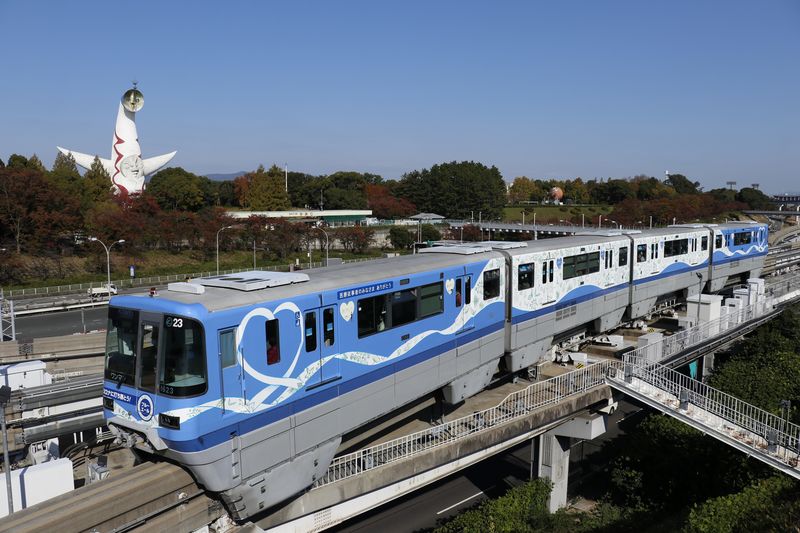
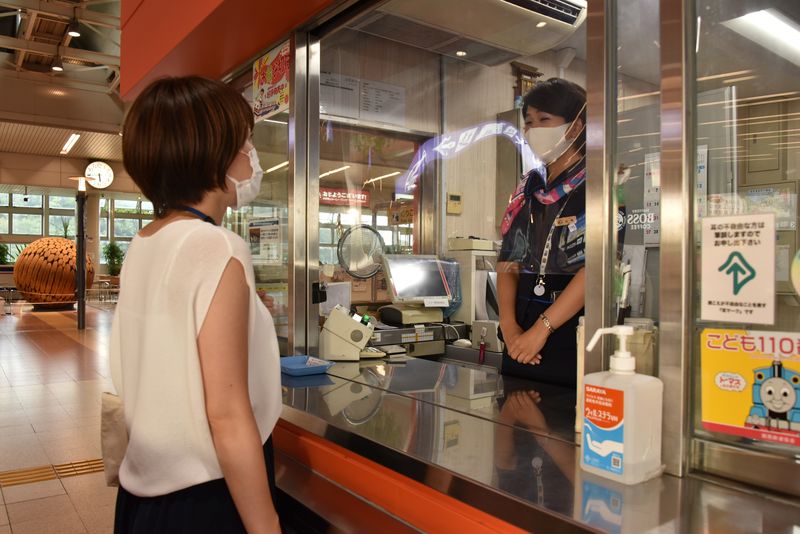
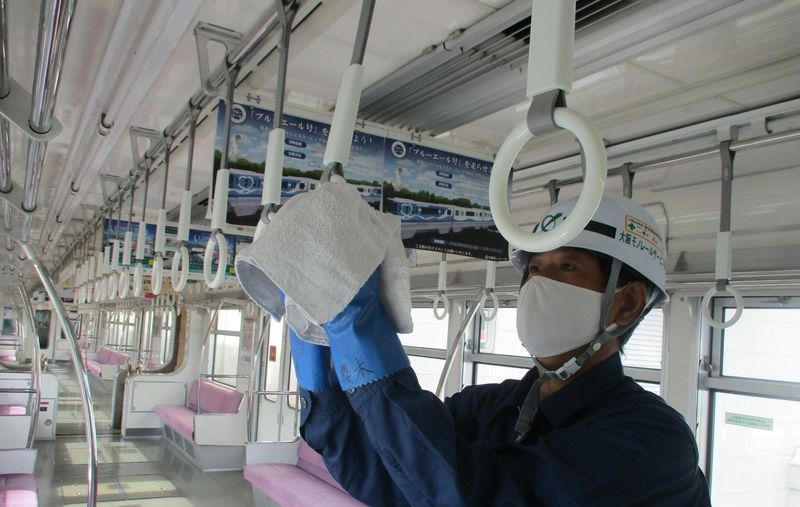
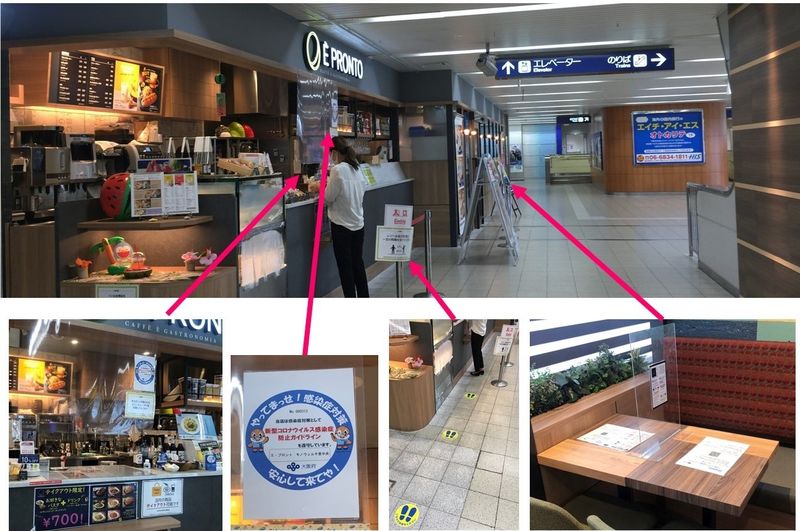
■ Facility Information
The Osaka Monorail operates two lines in northern Osaka Prefecture that run between Osaka Airport and Kadoma City, and between Expo'70 Commemorative Park and Saito-nishi. It is useful for tourists who are visiting spots like the Tower of the Sun and EXPOCITY, which are located along the line, or who are heading from Osaka Airport to downtown Osaka or Kyoto.
■ Health and Safety Measures
① Public awareness broadcasts within stations and train cars. ② Signs are posted in stations asking for cooperation in preventative measures like hand-washing and disinfection. ③ Some windows in train cars are kept open to allow for ventil... Read More ① Public awareness broadcasts within stations and train cars. ② Signs are posted in stations asking for cooperation in preventative measures like hand-washing and disinfection. ③ Some windows in train cars are kept open to allow for ventilation. Air purifiers have been installed on model 3000 trains. ④ Air-Catalyst SELFEEL, a deodorizer with antiviral properties, is applied throughout all train cars, as well as at ticket machines, fare-adjustment machines, luggage racks by ticket machines, and buttons inside and outside elevators (including those for wheelchairs). ⑤ Train car interiors are periodically disinfected. ⑥ Conductors and station staff wear masks and get temperature checks when arriving at work. ⑦ To prevent droplet infection, transparent sheets are installed at ticket windows by faregates. ⑧ Alcohol disinfectant has been placed at ticket windows by faregates and at drink corners. ⑨ At cafes and convenience stores within stations, transparent sheets are placed at counters, and partitions between customers' tables. * As of February 17, 2021
Official Website
Please check each company's official website for the latest information.
Sanyo Electric Railway Co., Ltd.
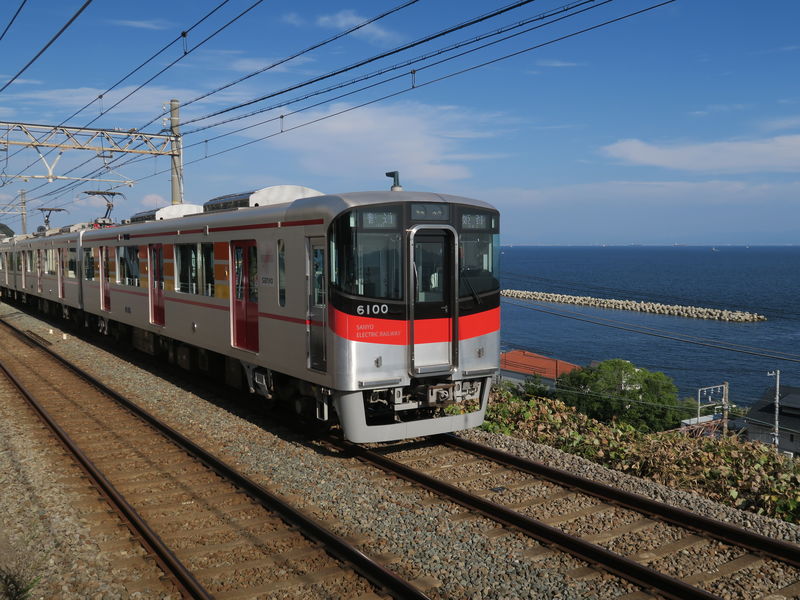
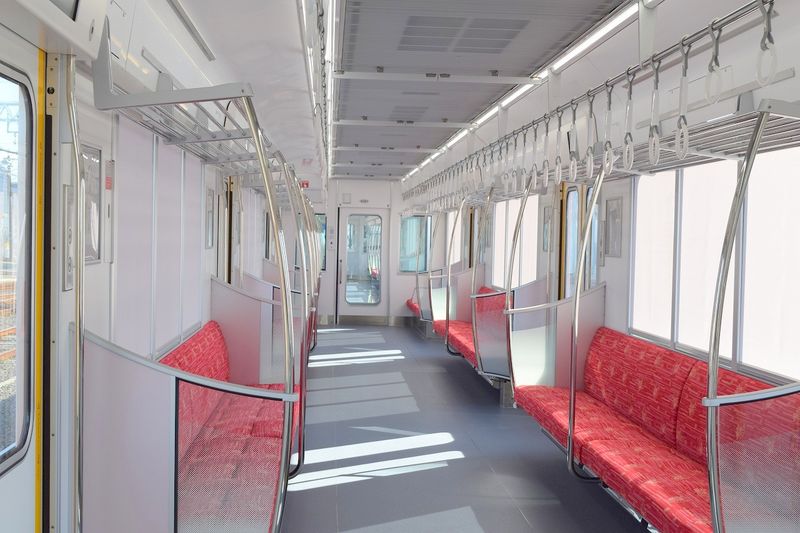
■ Facility Information
The Sanyo Railway is a “seaside express” running along Hyogo Prefecture’s southern coast along the Seto Inland Sea. Direct service with Hanshin Railways allows for a one-seat ride between Umeda Station in Osaka and Sanyo-Himeji Station. It’s the best way to access the World Heritage Site Himeji Castle or the Akashi-Kaikyo Bridge, the world’s longest suspension bridge.
■ Health and Safety Measures
・Thorough hand washing and mask use by station and train staff ・Thorough hand sanitizing ・Ventilation by opening windows (except in some cases, such as rainfall) ・Vinyl sheets placed at faregates and service windows ・Waiting room doors a... Read More ・Thorough hand washing and mask use by station and train staff ・Thorough hand sanitizing ・Ventilation by opening windows (except in some cases, such as rainfall) ・Vinyl sheets placed at faregates and service windows ・Waiting room doors are kept open ・Alcohol disinfectant placed in major stations ・Train cars, station facilities, and machinery are regularly disinfected ・Infection-prevention announcements are broadcasted in stations and train cars ・All train cars have been given antibacterial/antiviral coatings (as of 9/26/2020) ・Rush hour congestion conditions are being published for major stations * As of February 9, 2021
Official Website
Please check each company's official website for the latest information.
Toei Bus
■ Facility Information
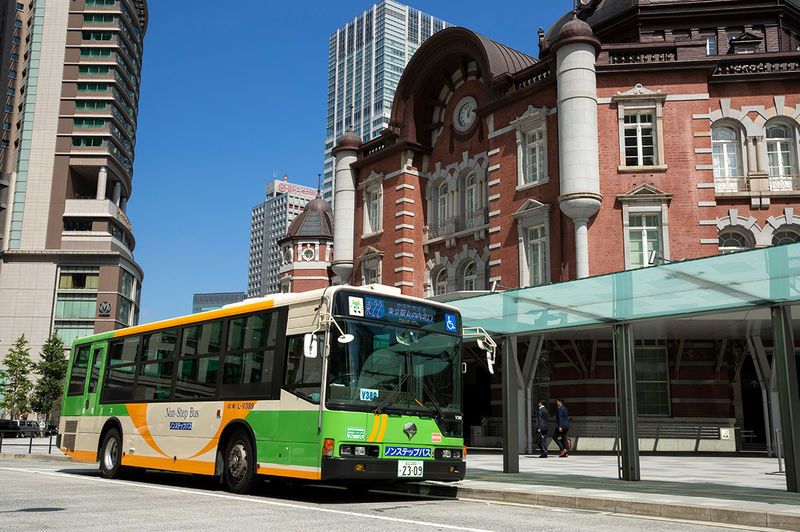
A bus system run by the Tokyo Metropolitan Government. Its buses connect the city center to working-class areas, as well as run routes in parts of Edogawa-ku and the Tama area. Its detailed network weaves through a large area of central Tokyo, including Tokyo Station, Ginza, Shinjuku, Ikebukuro, Ueno, Shinagawa, and Roppongi.
■ Health and Safety Measures
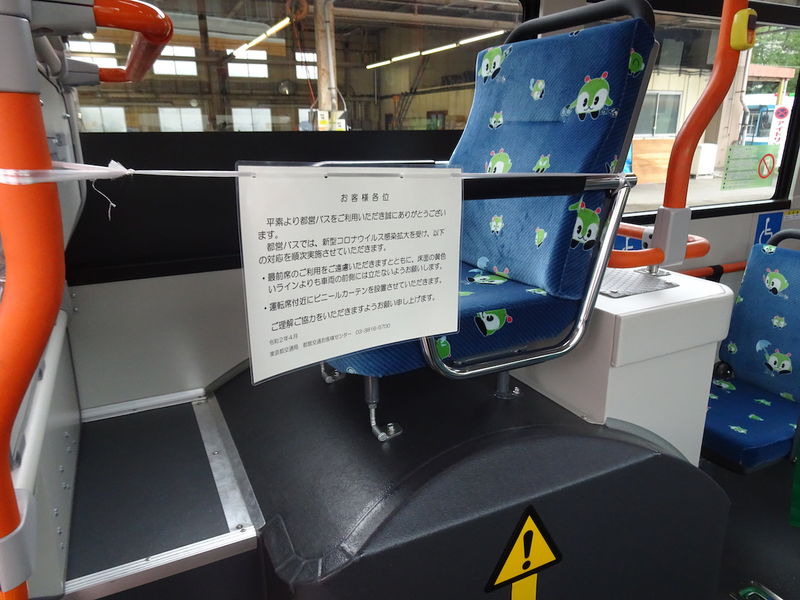
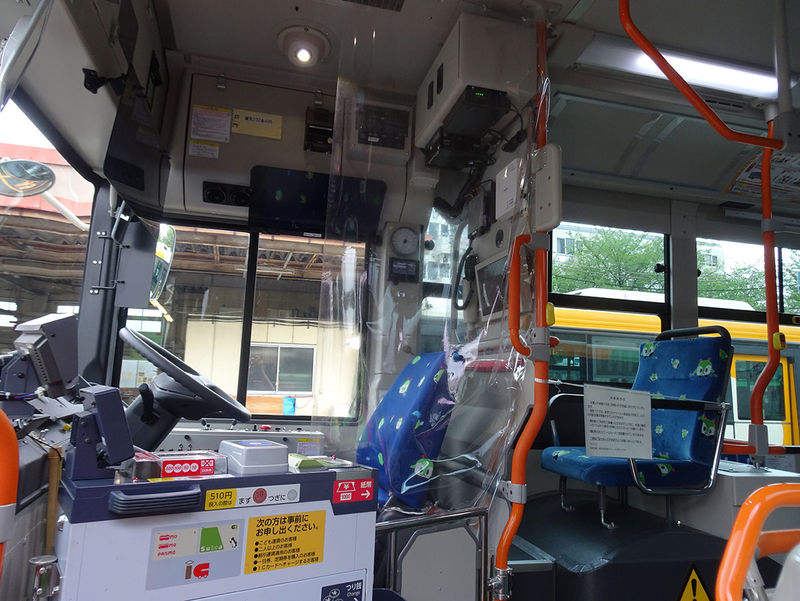
• Straps and handrails on buses are regularly disinfected • Ventilation within buses via air conditioners and open windows, as well as leaving doors open at first and last stops • Vinyl sheets are installed around the driver’s seat • Some... Read More • Straps and handrails on buses are regularly disinfected • Ventilation within buses via air conditioners and open windows, as well as leaving doors open at first and last stops • Vinyl sheets are installed around the driver’s seat • Some seats are left open to maintain social distance • Alcohol disinfectant is available (in reserved tour buses, as well as ticket windows) • Announcements are broadcast asking for cooperation on preventing infection • Masks are used by staff members • For staff members, hand washing and gargling is strictly enforced *As of May 26, 2020
Official Website
Please check each company's official website for the latest information.
Toei Subway
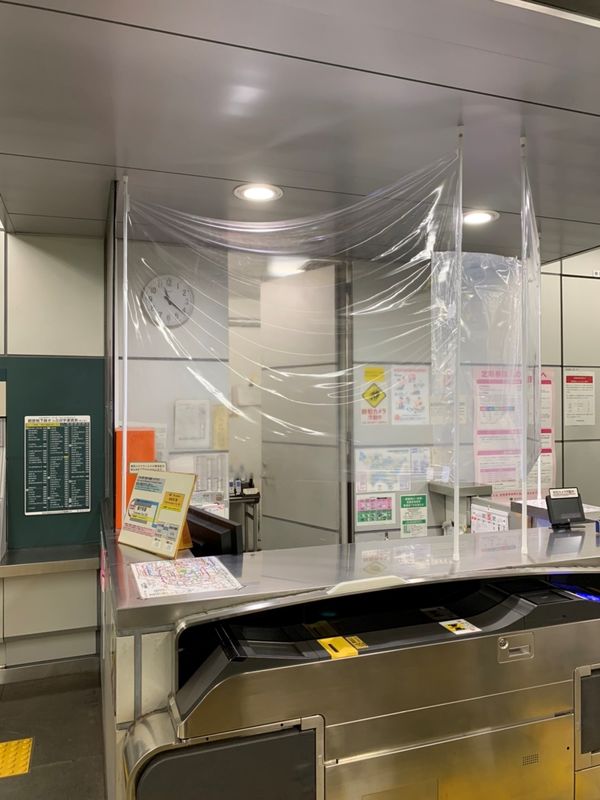
■ Facility Information
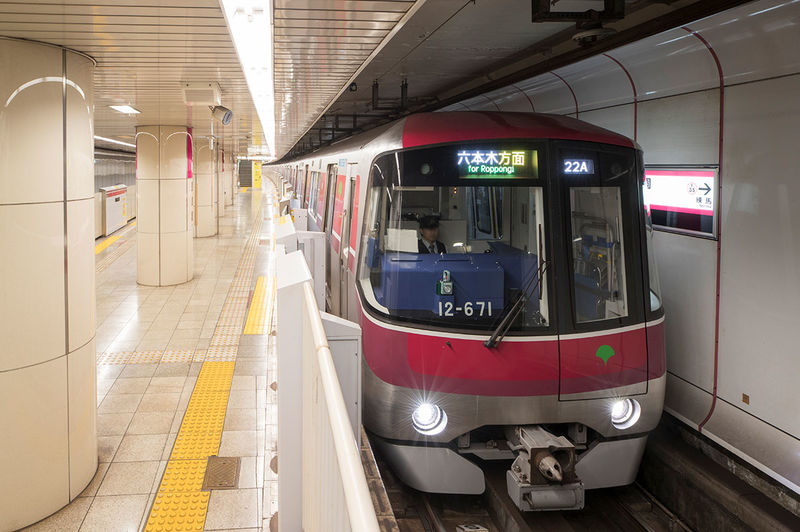
A subway system run by the Tokyo Metropolitan Government. Its four lines (the Asakusa, Mita, Shinjuku, and Oedo Lines) run through Tokyo and the surrounding areas. Running through numerous vibrant districts of Tokyo, these lines directly connect the city center with suburban residential areas.
■ Health and Safety Measures
• Straps and handrails on train cars are regularly disinfected • Ticket machines, escalator and stair handrails, and other station machinery within stations are regularly disinfected • Ventilation on board via air-conditioning systems and ... Read More • Straps and handrails on train cars are regularly disinfected • Ticket machines, escalator and stair handrails, and other station machinery within stations are regularly disinfected • Ventilation on board via air-conditioning systems and open windows • Vinyl sheets are installed at station ticket counters, etc • Alcohol disinfectant available (including in station offices) • Use of hand dryers within station restrooms is suspended • Announcements are broadcast asking for cooperation on preventing infection • Staff members are wearing masks • For staff members, hand washing and gargling is strictly enforced *As of May 26, 2020
Official Website
Please check each company's official website for the latest information.
Tokyo International Airport (Haneda Airport)
■ Facility Information
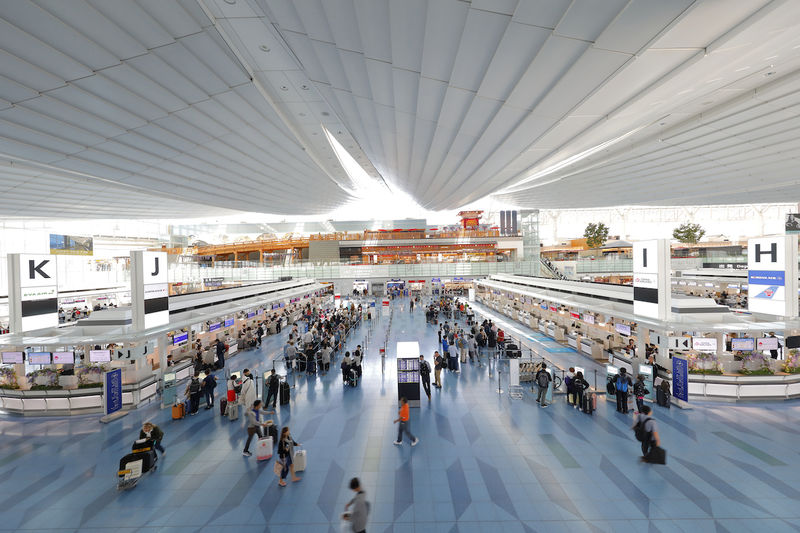
The gateway not just to other parts of Japan, but to the entire world as well. Due to its convenient location, easy access, comfortable facilities, and services that cater to every customer’s needs, Haneda Airport has a high reputation across the world.
■ Health and Safety Measures
• All airport staff are wearing masks • All door handles, handrails (including of moving walkways and escalators), and luggage-cart handles within the terminals are disinfected • Alcohol disinfectant for customers has been placed throughou... Read More • All airport staff are wearing masks • All door handles, handrails (including of moving walkways and escalators), and luggage-cart handles within the terminals are disinfected • Alcohol disinfectant for customers has been placed throughout the terminals * As of May 15, 2020
Official Website
Please check each company's official website for the latest information.
Tokyo Metro
■ Facility Information
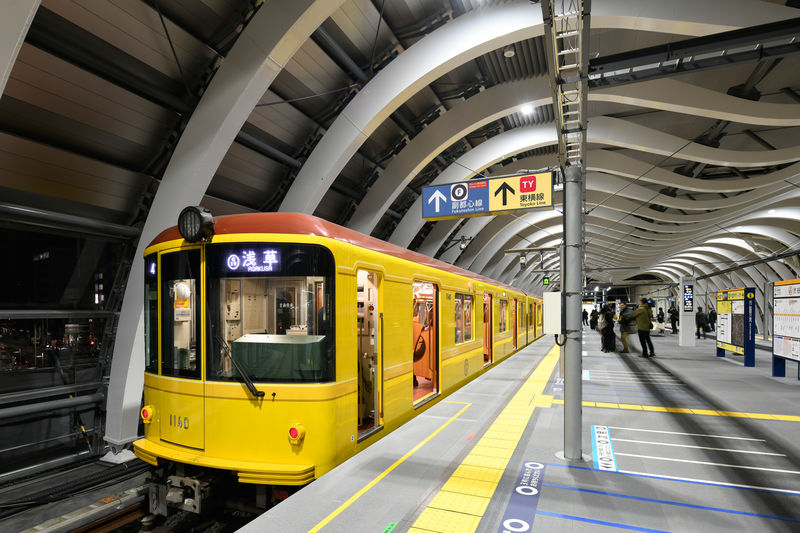
A subway network centered around central Tokyo that consists of 195 km of track and 180 stations across 9 lines. They offer convenient access to major tourist destinations like Ginza and Asakusa. In addition to assigning each line to a distinct color, Tokyo Metro provides convenient signage and route maps, as well as multilingual facilities, such as ticket machines in seven languages.
■ Health and Safety Measures
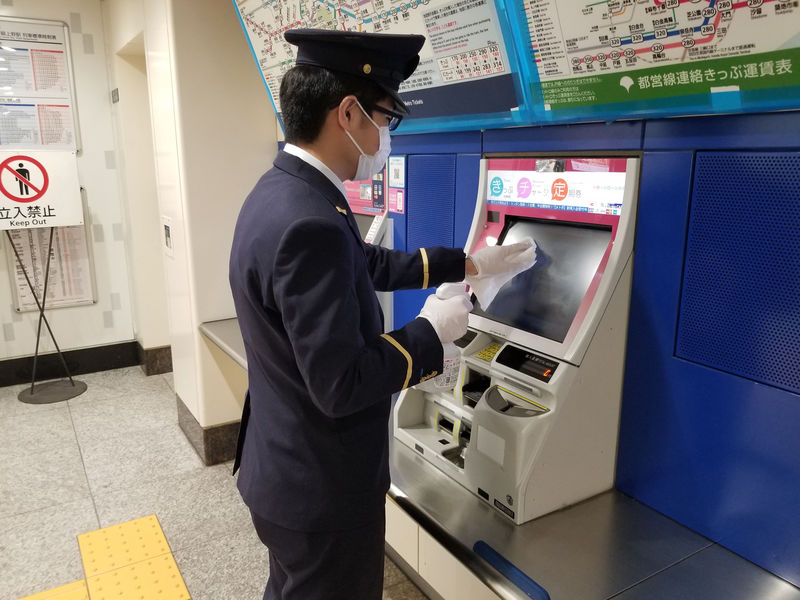
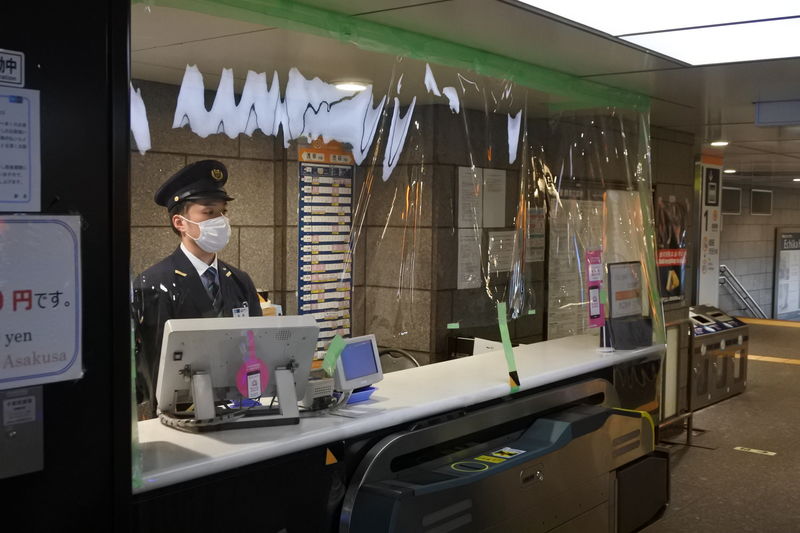
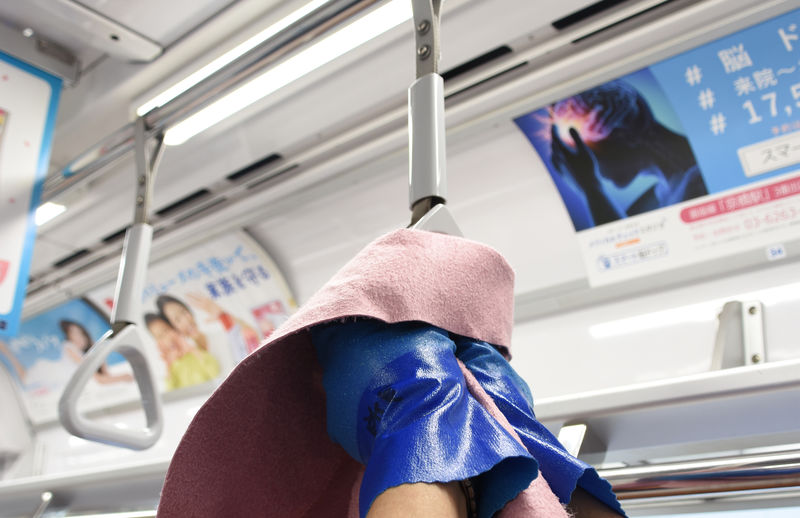
Tokyo Metro has been undertaking the installation of platform doors and elevators so that customers can comfortably use their services. In addition, in response to the recent coronavirus outbreak, they have taken the following measures to pr... Read More Tokyo Metro has been undertaking the installation of platform doors and elevators so that customers can comfortably use their services. In addition, in response to the recent coronavirus outbreak, they have taken the following measures to prevent infection: - Train cars are ventilated, either by opening windows or through air-conditioning - Alcohol hand-sanitizer for customers have been placed in all station offices - Alcohol disinfectant is used when cleaning stations - Soap has been placed in all restrooms in all stations - Staff members are strictly required to wear masks, wash their hands with soap, and gargle - Vinyl sheets have been installed at information counters in some stations - All train cars will be covered in an antiviral and antibacterial coating (to be implemented from July 2nd to mid-August) In addition, they are also experimenting with new technologies, such as robots that can verify each station’s disinfection situation. Tokyo Metro will undertake further measures to prevent the spread of the coronavirus. * As of July 10, 2020
Official Website
Please check each company's official website for the latest information.
Tokyo Sakura Tram (Toden Arakawa Line)
■ Facility Information
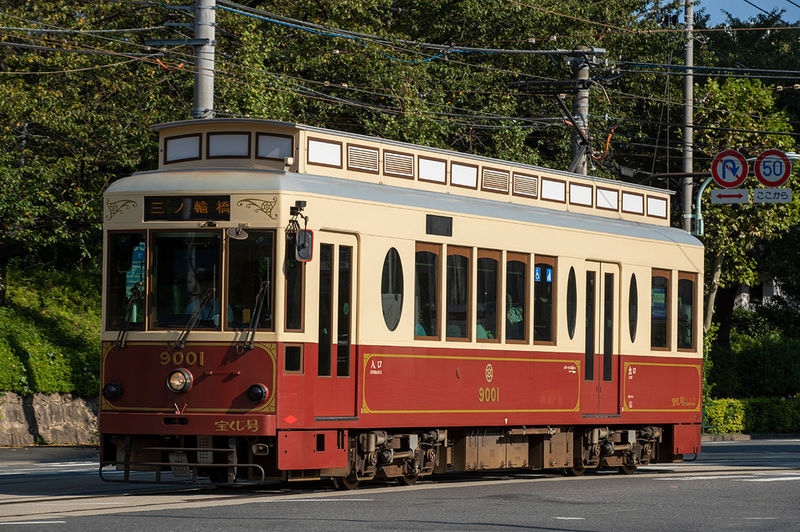
This tram line goes between Minowabashi and Waseda. Loved by locals as a convenient way to get around, it has recently become popular among tourists as well. The line runs through many interesting spots with plenty to see, such as beautiful cherry and rose flowers, scenic and historic places overflowing with culture, and lively, old-fashioned shopping streets.
■ Health and Safety Measures
• Straps and handrails on board are regularly disinfected • Ventilation within tram cars via air conditioners and open windows • Vinyl sheets are installed around the driver’s seat • Alcohol disinfectant is available (in station offices, ... Read More • Straps and handrails on board are regularly disinfected • Ventilation within tram cars via air conditioners and open windows • Vinyl sheets are installed around the driver’s seat • Alcohol disinfectant is available (in station offices, etc.) • Announcements are broadcast asking for cooperation on preventing infection • Masks are used by staff members • For staff members, hand washing and gargling is strictly enforced *As of May 26, 2020
Official Website
Please check each company's official website for the latest information.
West Japan Railway Company (JR West)

■ Facility Information
JR West provides railway access to tourist destinations all over Western Japan, focusing on regions such as Kansai, Hokuriku, San’yo, and San’in, and connecting everything from Osaka and Kyoto to regional airports like Kansai International Airport, Okayama Airport, and Hiroshima Airport.
■ Health and Safety Measures
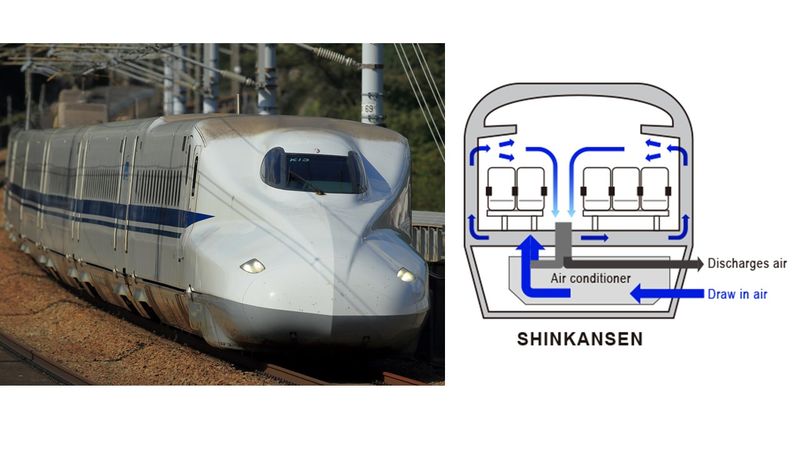
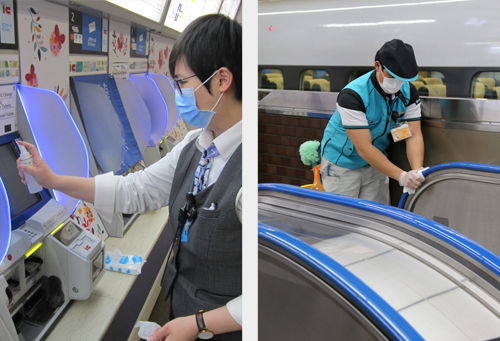
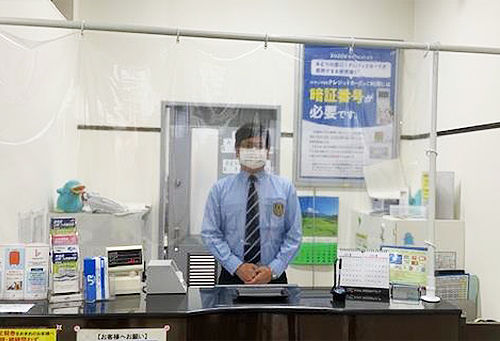
• Providing hourly updates on congestion by train line, section, and station (Kyoto, Osaka, Kobe, Okayama, Hiroshima) via the JR West website. • Improved ventilation via the AC system and staff leaving the windows open. The air inside of tr... Read More • Providing hourly updates on congestion by train line, section, and station (Kyoto, Osaka, Kobe, Okayama, Hiroshima) via the JR West website. • Improved ventilation via the AC system and staff leaving the windows open. The air inside of train cars is replaced with outside air every 6-8 minutes for shinkansen trains and varies for commuter and limited express trains based on the season and configuration of cars. • The handrails and straps on trains will be regularly disinfected. Additionally, the insides of train cars will be disinfected via a special antiviral spray that prevents the spread of viruses for long periods of time. • Stricter cleaning of ticket vending machines, escalator handrails, and other frequently touched surfaces, as well as more frequent disinfections. • Hand sanitizer has been placed on the premises of main stations for both shinkansen and regular trains. • Vinyl sheets have been placed at ticket gates and offices. • Markers have been placed on floors to ensure proper social distancing while queueing at ticket offices. *As of October 2020
Official Website
Please check each company's official website for the latest information.